 ログイン
ログイン【PEP卓越大学院プログラム】2025年1月実施8期生(2025年4月進入・編入)選抜試験(SE)情報を更新しました
2024年10月4日 17:13
卓越大学院プログラム
「パワー・エネルギー・プロフェッショナル(PEP)育成プログラム」
2025年1月実施の8期生(2025年4月進入・編入)選抜試験(SE)に関する情報を更新致しました。
詳細は、理工学術院HP大学院入試ページの中のPEP SE情報ページ(募集要項・出願書類)をご参照ください。

卓越大学院プログラム
「パワー・エネルギー・プロフェッショナル(PEP)育成プログラム」
2025年1月実施の8期生(2025年4月進入・編入)選抜試験(SE)に関する情報を更新致しました。
詳細は、理工学術院HP大学院入試ページの中のPEP SE情報ページ(募集要項・出願書類)をご参照ください。
We’re proud to bring you Waseda Universty’s Research Recap 2024. The video highlights just a few of the many innovators who conducted influential research at our university over the past year. Watch for a peek at their diverse research covering everything from self-healing interconnects and airborne microplastics to conversational AI media systems and hydrogen storage materials.
If you wish to find out more about the extensive activities at our University, click on one of the links that follow in the description. Thanks to all the students and professors who put their research on display for this video.
Research Theme: Economic development and environmental conservation in developing countries
Recent Research: https://www.waseda.jp/inst/research/news-en/76941
Researcher Details: https://w-rdb.waseda.jp/html/100001339_en.html
2022 WASEDA research acceleration program for early-stage principal investigators

Research Theme: Development of additive manufactured functional structure
Recent Research: https://www.waseda.jp/inst/research/news-en/76856
Researcher Details: https://w-rdb.waseda.jp/html/100002014_en.html
The recipients of the 2022 Waseda Research Award
Research Theme: Micro-electro-mechanical systems
Recent Research: https://www.waseda.jp/inst/research/news-en/76980
Researcher Details: https://w-rdb.waseda.jp/html/100001156_en.html
The recipients of the 2016 Waseda Research Award
2023 Next-generation Core researcher
Research Theme: Inorganic materials chemistry
Recent Research: https://www.waseda.jp/inst/research/news-en/76941
Researcher Details: https://w-rdb.waseda.jp/html/100003644_en.html
Research Theme: Public health, Infectious diseases, Health education
Recent Research: https://www.waseda.jp/inst/research/news-en/76882
Researcher Details: https://w-rdb.waseda.jp/html/100003620_en.html
Research Theme: Environmental Chemistry
Recent Research: https://www.waseda.jp/top/en/news/78501
Researcher Details: https://w-rdb.waseda.jp/html/100000728_en.html
Research Theme: Energy material science, chemical reaction and energy process engineering
Recent Research: https://www.waseda.jp/inst/research/news-en/76960
Researcher Details: https://w-rdb.waseda.jp/html/100001495_en.html
Research Theme: Conversational AI media systems
Recent Research: https://www.waseda.jp/inst/research/news-en/76861
Researcher Details: https://www.yoichimatsuyama.com/about/
Research Theme: Safety and performance optimization
Recent Research: https://www.waseda.jp/inst/research/news-en/76832
Researcher Details: https://w-rdb.waseda.jp/html/100001822_en.html
============================================
You Tube https://www.youtube.com/@wasedaPR
Instagram https://www.instagram.com/waseda_university/
LinkedIn https://www.linkedin.com/school/wasedauniversity/
Facebook https://www.facebook.com/WasedaU
X(Twitter) https://twitter.com/waseda_univ

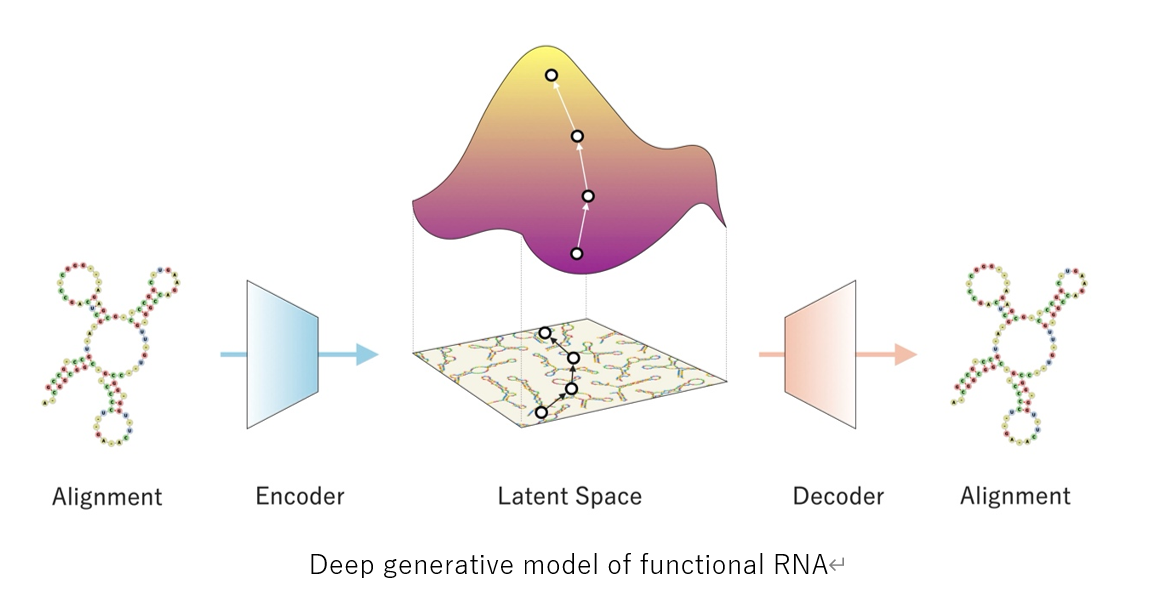
While antisense oligonucleotide and aptamer drugs have been on the market since the 2000s, it was not until the development of SARS-CoV2 mRNA vaccines employed to fight against the COVID-19 pandemic that RNA-based therapeutics attracted the attention of the general public.
In contrast, because of their immense potential—not only for medical applications but for basic biological research and biotechnology—RNA engineering has been on the scientific forefront for decades. As such, there is a tremendous interest in revolutionizing current approaches for designing RNA sequences. Remarkably, there is still no versatile computational platform for functional RNA design. Most existing approaches function by reconstructing specific secondary structures or are restricted to particular types of sequences, such as CRISPR gRNA, mRNA, or specific riboswitches. Since these traditional approaches typically depend on predicting and optimizing RNA secondary structures, their accuracy is inherently constrained by structural prediction and optimization algorithms. A novel approach was thus necessary to avoid these limitations and produce powerful and robust computational methods to construct RNA with desired functions.
The research team aimed to avoid these problems by focusing on RNA families, which are sequence groups with thousands of functional RNAs endowed with identical functions. Even with only a few hundred sequences, multiple sequence alignment can create a consensus secondary structure from which new sequences can be generated. As this computational platform theoretically works with any functional RNA families, the researchers named their deep generative model the RNA family sequence Generator, or RfamGen, which is the world’s first deep generative model for functional RNA design.
RfamGen combines two approaches: (1) covariance model and (2) variational autoencoder. The covariance model is a type of statistical framework for RNA alignment and consensus secondary structure that quantitatively evaluates variations of sequence and structure. Meanwhile, the variational autoencoder is a deep generative model with an internal representation called “latent space” to mitigate the complexity associated with exploring the exponentially vast sequence space for the optimization of RNA sequences. By leveraging these two concepts, the researchers generated a system that learns sequence and structural information to explore new RNA designs logically, a feat that has never been done previously.
The team first compared RfamGen, which considers both alignment and secondary structural information, with models accounting for either alignment or secondary structural information, or neither.
For the 18 RNA families tested (each with alignments comprised of at least 10,000 sequences), RfamGen showed a significantly improved ability to generate high-quality RNA sequences. Furthermore, the researchers also tested RfamGen’s capabilities when restricted to a limited number of input sequences from which to learn. Despite only being trained on 500 input sequences, RfamGen successfully generated RNA sequences with high scores, thus demonstrating its efficient generative capacity.
The researchers next trained RfamGen using 629 RNA families in total, each with at least 100 sequences from the Rfam database, and found RfamGen performs substantially better compared to other systems. The researchers, furthermore, evaluated how well generated RNA sequences function by randomly synthesizing several RNA sequences generated from training it with a diversity of self-cleavage ribozymes and from random sampling a covariance model. Notably, the sequences generated by RfamGen showed enzymatic activity, while the randomly sampled sequences did not, indicating RfamGen learned important features essential for functionality from the training data.
Lastly, the research team utilized the ligand-dependent self-cleavage activity of the glmS ribozyme as a comparative platform to benchmark generated sequences by RfamGen to natural glmS sequences. They first trained RfamGen using about 500 natural glmS ribozyme sequences and sampled the “latent space” to obtain 1,000 generated sequences. Using a massively parallel assay, they tested these 1,000 generated sequences, 761 natural sequences in the glmS ribozyme family (RF00234), and 100 sequences with kinetic measurements from a previous report. Not only did the team observe the generated sequences to possess a similar distribution of cleavage kinetics as natural sequences, but remarkably found that generated sequences showed higher cleavage rates compared to natural sequences, thus suggesting RfamGen successfully generates high-quality sequences with comparable or higher efficiency than some natural sequences.
The golden age of RNA-based bioengineering is on the horizon. By constructing this deep generative model for functional RNA design, the research team believes RfamGen will be a fundamental driving force to propel RNA biology into a new era and enable discoveries and applications based on RNA.
Nature Methods
Deep generative design of RNA family sequences
Shunsuke Sumi1,2,3, Michiaki Hamada3,4,5,*, Hirohide Saito1,*
* : Corresponding authors
Glass – whether used to insulate our homes or as the screens in our computers and smartphones – is a fundamental material. Yet, despite its long usage throughout human history, the disordered structure of its atomic configuration still baffles scientists, making understanding and controlling its structural nature challenging. It also makes it difficult to design efficient functional materials made from glass.
To uncover more about the structural regularity hidden in glassy materials, a research group has focused on ring shapes in the chemically bonded networks of glass. The group, which included Professor Motoki Shiga from Tohoku University’s Unprecedented-scale Data Analytics Center, and Professor Akihiko Hirata from Waseda University created new ways in which to quantify the rings’ three-dimensional structure and structural symmetries: “roundness” and “roughness.”
Using these indicators enabled the group to determine the exact number of representative ring shapes in crystalline and glassy silica (SiO2), finding a mixture of rings unique to glass and ones that resembled the rings in the crystals.
Additionally, the researchers developed a technique to measure the spatial atomic densities around rings by determining the direction of each ring.
They revealed that there is anisotropy around the ring, i.e., that the regulation of the atomic configuration is not uniform in all directions, and that the structural ordering related to the ring-originated anisotropy is consistent with experimental evidence, like the diffraction data of SiO2. It was also revealed that there were specific areas where the atomic arrangement followed some degree of order or regularity, even though it appeared to be a discorded and chaotic arrangement of atoms in glassy silica.
“The structural unit and structural order beyond the chemical bond had long been assumed through experimental observations but its identification has eluded scientists until now,” says Shiga. “Furthermore, our successful analysis contributes to understanding phase-transitions, such as vitrification and crystallization of materials, and provides the mathematical descriptions necessary for controlling material structures and material properties.”
Looking ahead, Shiga and his colleagues will use these techniques to come up with procedures for exploring glass materials, procedures that are based on data-driven approaches like machine learning and AI.
Their findings were published open access in the journal Communication Materials on November 3, 2023.
Title: Ring-originated anisotropy of local structural ordering in amorphous and crystalline silicon dioxide
Authors: Motoki Shiga, Akihiko Hirata, Yohei Onodera, and Hirokazu Masai
Journal: Communications Materials
DOI: 10.1038/s43246-023-00416-w
Researchers present a novel experimental system for simultaneous measurement of dynamic mechanical properties and X-ray computed tomography
Rubber-like materials can exhibit both spring-like and flow-like behaviors simultaneously, which contributes to their exceptional damping abilities. To understand the dynamic viscoelasticity of these materials, researchers from Japan have recently developed a novel system that can conduct dynamic mechanical analysis and dynamic micro X-ray computed tomography simultaneously. This technology can enhance our understanding of the microstructure of viscoelastic materials and pave the way for the development of better materials.
Experimental setup for the simultaneous measurement of dynamic mechanical properties and dynamic micro X-ray CT.
Rubber-like materials, commonly used in dampeners, possess a unique property known as dynamic viscoelasticity, enabling them to convert mechanical energy from vibrations into heat while exhibiting spring-like and flow-like behaviors simultaneously. Customization of these materials is possible by blending them with compounds of specific molecular structures, depending on the dynamic viscosity requirements.
However, the underlying mechanisms behind the distinct mechanical properties of these materials remain unclear. A primary reason for this knowledge gap has been the absence of a comprehensive system capable of simultaneously measuring the mechanical properties and observing the microstructural dynamics of these materials. While X-ray computed tomography (CT) has recently emerged as a promising option for a non-destructive inspection of the internal structure of materials down to nano-scale resolutions, it is not suited for observation under dynamic conditions.
Against this backdrop, a team of researchers, led by Associate Professor (tenure-track) Masami Matsubara from the School of Creative Science and Engineering at the Faculty of Engineering at Waseda University in Japan, has now developed an innovative system that can conduct dynamic mechanical analysis and dynamic micro X-ray CT imaging simultaneously. Their study was made available online on October 19, 2023 and will be published in Volume 205 of the journal Mechanical Systems and Signal Processing on December 15, 2023.
“By integrating X-ray CT imaging performed at the large synchrotron radiation facility Spring-8(BL20XU) and mechanical analysis under dynamic conditions, we can elucidate the relationship between a material’s internal structure, its dynamic behavior, and its damping properties,” explains Dr. Matsubara. At the core of this novel system is the dynamic micro X-ray CT and a specially designed compact shaker developed by the team that is capable of precise adjustment of vibration amplitude and frequency.
The team utilized this innovative system to investigate the distinctions between styrene-butadiene rubber (SBR) and natural rubber (NR), as well as to explore how the shape and size of ZnO particles influence the dynamic behavior of SBR composites.
The researchers conducted dynamic micro X-ray CT scans on these materials, rotating them during imaging while simultaneously subjecting them to vibrations from the shaker. They then developed histograms of local strain amplitudes by utilizing the local strains extracted from the 3D reconstructed images of the materials’ internal structures. These histograms, in conjunction with the materials’ loss factor, a measure of the inherent damping of a material, were analyzed to understand their dynamic behavior.
When comparing materials SBR and NR, which have significantly different loss factors, the team found no discernible differences between their local strain amplitude histograms. However, the histograms displayed wider strain distributions in the presence of composite particles like ZnO. This suggests that strain within these materials is non-uniform and depends on the shape and size of the particles, which may have masked any changes from the addition of the particles.
“This technology can allow us to study the microstructure of rubber and rubber-like materials under dynamic conditions and can result in the development of fuel-efficient rubber tires or gloves that do not deteriorate. Moreover, this technology can also enable the dynamic X-ray CT imaging of living organs that repeatedly deform, such as the heart, and can even pave the way for the development of artificial organs,” says Dr. Matsubara, highlighting the importance of this study.
Overall, this breakthrough technology has the potential to advance the understanding of the microstructure of viscoelastic materials, likely opening the doors for the development of novel materials with improved properties.
| Authors | Masami Matsubara1, Ryo Takara2, Taichi Komatsu2, Shogo Furuta2, Khoo Pei Loon2, Masakazu Kobayashi2, Hitomu Mushiaki3, Kentaro Uesugi4, Shozo Kawamura2, and Daiki Tajiri2 |
| Title of original paper | In-situ measurement of dynamic micro X-ray CT and dynamic mechanical analysis for rubber materials |
| Journal | Mechanical Systems and Signal Processing |
| DOI | 10.1016/j.ymssp.2023.110875 |
| Affiliations | 1Department of Modern Mechanical Engineering, Waseda University 2Department of Mechanical Engineering, Toyohashi University of Technology 3Hyogo Prefectural Institute of Technology 4Japan Synchrotron Radiation Research Institute |
Located in the heart of Tokyo, Waseda University is a leading private research university that has long been dedicated to academic excellence, innovative research, and civic engagement at both the local and global levels since 1882. The University has produced many changemakers in its history, including nine prime ministers and many leaders in business, science and technology, literature, sports, and film. Waseda has strong collaborations with overseas research institutions and is committed to advancing cutting-edge research and developing leaders who can contribute to the resolution of complex, global social issues. The University has set a target of achieving a zero-carbon campus by 2032, in line with the Sustainable Development Goals (SDGs) adopted by the United Nations in 2015.
To learn more about Waseda University, visit https://www.waseda.jp/top/en
Masami Matsubara is an Associate Professor (tenure-track) at the School of Creative Science and Engineering of the Faculty of Science and Engineering at Waseda University, Japan. He earned his Ph.D. from Doshisha University. His research focuses on the mechanics of materials, mechatronics, and dynamic modelling. He has recently worked on vibration reduction methods and dynamic design for large-scale numerical analysis models and detailed design and experimental methods for component and unit testing. He is a member of the Japan Society of Mechanical Engineers (JSME) and SAE International. He received the JSME Medal for Outstanding Paper in 2014, 2020, and 2022.
文部科学省卓越大学院プログラム
「パワー・エネルギー・プロフェッショナル育成プログラム」
2024年1月実施の7期生(2024年進入・編入)選抜試験(SE)に関する情報更新致しました。
理工HP大学院入試ページの中のPEPSE情報ページ(募集要項・出願書類)
https://www.waseda.jp/fsci/admissions_gs/guidelines/pep/
Researchers have successfully generated electricity directly from methylcyclohexane, an organic hydride, using solid oxide fuel cells, with lower energy than conventional catalytic dehydrogenation reactions.
Methylcyclohexane is very promising as a hydrogen carrier that can safely and efficiently transport and store hydrogen. However, the dehydrogenation process using catalysts has issues due to its durability and large energy loss. Recently, Japanese researchers have succeeded in using solid oxide fuel cells to generate electricity directly from methylcyclohexane and recover toluene for reuse. This research is expected to not only reduce energy requirements but also explore new chemical synthesis by fuel cells.
Caption: Solid oxide fuel cells can generate electricity directly from organic hydrides and have potential applications in chemical synthesis. Credit: Akihiko Fukunaga from Waseda University
Methylcyclohexane (MCH), a type of organic hydride, is expected to be an excellent hydrogen carrier because it remains liquid at room temperature, is easy to transport, has low toxicity, and has a higher hydrogen density than high-pressure hydrogen. Dehydrogenation—the process of removing hydrogen atoms from molecules—in the presence of a catalyst, yields hydrogen and the byproduct toluene, which can then be used to generate electricity to produce CO2-free power. However, the dehydrogenation reaction is an endothermic reaction, and energy loss as well as the facilities required for the reaction are issues.
Recently, a team of researchers from Japan, led by Professor Akihiko Fukunaga from the Department of Applied Chemistry at Waseda University, has succeeded in generating electricity directly from MCH using solid oxide fuel cells (SOFC). Their work was made available online on July 4, 2023 in Volume 348 of Applied Energy.
The research team tried to perform two processes simultaneously in a fuel cell: dehydrogenation from organic hydrides, which is an endothermic reaction, and electricity generation, which is an exothermic reaction. To achieve this, they used an anode-supported solid oxide fuel cell with a higher operating temperature than that of a polymer electrolyte fuel cell. They operated it at a temperature that did not allow pyrolysis of organic hydrides and under conditions that prevented carbon deposition at the electrodes. The production ratio of toluene to benzene was 94:6. This achievement demonstrated the possibility of generating electricity without using dehydrogenation facilities which were conventionally required and using less energy than that required for dehydrogenation reactions using catalysts.
In addition, “It was elucidated that by changing the conditions, oxygen groups could be introduced into the aromatic skeleton using a fuel cell” reveals Fukunaga.
These results indicate that the MHC reacts with the conducting oxygen ions in the SOFC to successfully generate electricity. Thus, power can be generated directly from MHC, and the energy required for direct power generation is lesser than that required for the conventional catalyst-assisted dehydrogenation reaction of MCH.
“Fuel cells have been studied and developed as devices that produce highly efficient, carbon-free electricity through the electrochemical reaction of hydrogen and oxygen. In this study, we have demonstrated that this device can be applied to control dehydrogenation reactions from organic hydrides and oxygen substitution reactions of aromatic rings. In the future, new synthetic chemistry may be created by applying fuel cells.” concludes Fukunaga. Here’s hoping that the proposed technology will pave the way to a sustainable hydrogen-based society!
Akihiko Fukunaga1, Asami Kato1, Yuki Hara1, and Takaya Matsumoto
Dehydrogenation of Methylcyclohexane Using Solid Oxide Fuel Cell – A Smart Energy Conversion
10.1016/j.apenergy.2023.121469
1 Department of Applied Chemistry, Waseda University
Located in the heart of Tokyo, Waseda University is a leading private research university that has long been dedicated to academic excellence, innovative research, and civic engagement at both the local and global levels since 1882. The University has produced many changemakers in its history, including nine prime ministers and many leaders in business, science and technology, literature, sports, and film. Waseda has strong collaborations with overseas research institutions and is committed to advancing cutting-edge research and developing leaders who can contribute to the resolution of complex, global social issues. The University has set a target of achieving a zero-carbon campus by 2032, in line with the Sustainable Development Goals (SDGs) adopted by the United Nations in 2015.
Dr. Akihiko Fukunaga is a Faculty of Science and Engineering at the School of Advanced Science and Engineering at Waseda University in Japan. He received his Ph.D. from Waseda University in 1999 and has been a Professor of Applied Chemistry there since 2019. Prior to that, he worked at JXTG Nippon Oil & Energy Corporation from 1984 to 2019, where he successfully commercialized the residential fuel cell system, EneFarm. His research interests include energy materials, hydrogen, fuel cells, and carbon recycling.

[Image Title] All-solid-state rechargeable air battery with redox-active organic negative electrode. [Image Caption] The battery, which uses a polymeric dihydroxy-benzoquinone-based negative electrode and a Nafion-based solid electrolyte, exhibits high Coulombic efficiency and discharge capacity.
Metals are typically used as active materials for negative electrodes in batteries. Recently, redox-active organic molecules, such as quinone- and amine-based molecules, have been used as negative electrodes in rechargeable metal–air batteries with oxygen-reducing positive electrodes. Here, protons and hydroxide ions participate in the redox reactions. Such batteries exhibit high performance, close to the maximum capacity that is theoretically possible. Furthermore, using redox-active organic molecules in rechargeable air batteries overcomes problems associated with metals, including the formation of structures called ‘dendrites,’ which impact battery performance, and have negative environmental impact. However, these batteries use liquid electrolytes—just like metal-based batteries—which pose major safety concerns like high electrical resistance, leaching effects, and flammability.
Now, in a new study published in Angewandte Chemie International Edition on May 2, 2023, a group of Japanese researchers have developed an all-solid-state rechargeable air battery (SSAB) and investigated its capacity and durability. The study was led by Professor Kenji Miyatake from Waseda University and the University of Yamanashi, and co-authored by Professor Kenichi Oyaizu from Waseda University.
The researchers chose a chemical called 2,5-dihydroxy-1,4-benzoquinone (DHBQ) and its polymer poly(2,5-dihydroxy-1,4-benzoquinone-3,6-methylene) (PDBM) as active materials for the negative electrode due to their stable and reversible redox reactions in acidic conditions. In addition, they utilized a proton-conductive polymer called Nafion as the solid electrolyte, thereby replacing conventional liquid electrolytes. “To the best of my knowledge, no air batteries based on organic electrodes and solid polymer electrolyte have been developed yet,” says Miyatake.
After the SSAB was in place, the researchers experimentally assessed its charge–discharge performance, rate characteristics, and cyclability. They found that unlike typical air batteries that use a metallic negative electrode and an organic liquid electrolyte, the SSAB did not deteriorate in the presence of water and oxygen. Furthermore, replacing the redox-active molecule DHBQ with its polymeric counterpart PDBM formed a better negative electrode. While the per gram-discharge capacity of the SSAB-DHBQ was 29.7 mAh, the corresponding value of the SSAB-PDBM was 176.1 mAh, at a constant current density of 1 mAcm-2.
The researchers also found that the coulombic efficiency of SSAB-PDBM was 84% at 4 C rate, which gradually decreased to 66% at 101 C rate. While the discharge capacity of SSAB-PDBM reduced to 44% after 30 cycles, by increasing the proton-conductive polymer content of the negative electrode, the researchers could significantly improve it to 78%. Electron microscopic images confirmed that the addition of Nafion improved the performance and durability of the PDBM-based electrode.
This study demonstrates the successful operation of an SSAB comprising redox-active organic molecules as the negative electrode, a proton-conductive polymer as the solid electrolyte, and an oxygen-reducing, diffusion type positive electrode. The researchers hope that it will pave the way for further advancements. “This technology can extend the battery life of small electronic gadgets such as smartphones and eventually contribute to realizing a carbon-free society,” concludes Miyatake.
Makoto Yonenaga1, Yusuke Kaiwa2, Kouki Oka2,3, Kenichi Oyaizu2, and Kenji Miyatake1
Angewandte Chemie International Edition
1Clean Energy research Center, Fuel Cell Nanomaterials Center, University of Yamanashi
2Department of Applied Chemistry, Research Institute for Science and Engineering, Waseda University
3Center for Future Innovation (CFI) and Department of Applied Chemistry, Graduate School of Engineering, Osaka University
This work was partly supported by the Ministry of Education, Culture, Sports, Science and Technology (MEXT), Japan, through Grants-in-Aid for Scientific Research (18H05515, 23H02058), MEXT Program: Data Creation and Utilization Type Material Research and Development Project (JPMXP1122712807), and JKA promotion funds from AUTORACE.
Located in the heart of Tokyo, Waseda University is a leading private research university that has long been dedicated to academic excellence, innovative research, and civic engagement at both the local and global levels since 1882. The University has produced many changemakers in its history, including nine prime ministers and many leaders in business, science and technology, literature, sports, and film. Waseda has strong collaborations with overseas research institutions and is committed to advancing cutting-edge research and developing leaders who can contribute to the resolution of complex, global social issues. The University has set a target of achieving a zero-carbon campus by 2032, in line with the Sustainable Development Goals (SDGs) adopted by the United Nations in 2015.
To learn more about Waseda University, visit https://www.waseda.jp/top/en
Kenji Miyatake received his Ph.D. degree in chemistry from Waseda University in 1996. He was a Japan Society for the Promotion of Science (JSPS) postdoctoral fellow at McGill University from 1999 to 2001. In 2001, he was offered an associate professor position at the Clean Energy Research Center at the University of Yamanashi, where he currently serves as a professor. He also holds a professor position in his alma mater since 2020. He is also a Fellow of the Royal Society of Chemistry.

[Image Title] A schematic representation of the simplified cell configuration and cell reactions of the dihydroxy-benzoquinone-based solid-state air battery. [Image Caption] Researchers have developed an all-solid-state rechargeable air battery with a dihydroxy-benzoquinone-based organic negative electrode and Nafion polymer electrolyte.
Wearable wireless biosensors are an integral part of digital healthcare and monitoring. Commonly used chipless resonant antenna-based biosensors are simple and affordable, but have limited applicability due to their low sensitivity. Now, researchers from Japan have developed a novel, wireless, parity–time symmetry-based bioresonator that can detect minute concentrations of tear glucose and blood lactate. This highly sensitive, tunable, and robust bioresonator has the potential to revolutionize personalized health monitoring and digitized healthcare systems.

Wireless wearable biosensors have been a game changer in personalized health monitoring and healthcare digitization because they can efficiently detect, record, and monitor medically significant biological signals. Chipless resonant antennae are highly promising components of wearable biosensors, as they are affordable and tractable. However, their practical applications are limited by low sensitivity (inability to detect small biological signals) caused by low quality (Q) factor of the system.
To overcome this hurdle, researchers led by Professor Takeo Miyake from Waseda University, Professor Yin Sijie from Beijing Institute of Technology, and Taiki Takamatsu from Japan Aerospace Exploration Agency, have developed a wireless bioresonator using “parity–time (PT) symmetry” that can detect minute biological signals. Their work has been published in Advanced Materials Technologies.
In this study, the researchers designed a bioresonator consisting of a magnetically coupled reader and sensor with high Q factor, and thus, increased sensitivity to biochemical changes. The reader and sensor both comprise an inductor (L) and capacitor (C) that are parallel-connected to a resistor (R). In the sensor, the resistor is a chemical sensor called a “chemiresistor” that converts biochemical signals into changes in resistance. The chemiresistor contains an enzymatic electrode with an immobilized enzyme. Minute biochemical changes at the enzymatic electrode (in response to changes in the levels of biomolecules such as blood sugar or lactate) are thus converted into electrical signals by the sensor, and then amplified at the reader.
Explaining the technical concept behind their novel biosensor, Miyake says, “We modeled the characteristics of the PT-symmetric wireless sensing system by using an eigenvalue solution and input impedance, and experimentally demonstrated the sensitivity enhancement at/near the exceptional point by using parallel inductance–capacitance–resistance (LCR) resonators. The developed amplitude modulation-based PT-symmetric bioresonator can detect small biological signals that have been difficult to measure wirelessly until now. Moreover, our PT-symmetric system provides two types of readout modes: threshold-based switching and enhanced linear detection. Different readout modes can be used for different sensing ranges.”
The researchers tested the system (here containing a glucose-specific enzyme) on human tear fluids and found that it could detect glucose concentrations ranging from 0.1 to 0.6 mM. They also tested it with a lactate-specific enzyme and commercially available human skin and found that it could measure lactate levels in the range of 0.0 to 4.0 mM through human skin tissue, without any loss of sensitivity. This result further indicates that the biosensor can be used as an implantable device. Compared to a conventional chipless resonant antenna-based system, the PT-symmetric system achieved a 2000-fold higher sensitivity in linear and a 78% relative change in threshold-based detection respectively.
Sharing his vision for the future, Miyake concludes, “The present telemetry system is robust and tunable. It can enhance the sensitivity of sensors to small biological signals. We envision that this technology can be used for developing smart contact lenses to detect tear glucose and/or implantable medical devices to detect lactate for efficient monitoring of diabetes and blood poisoning.”
This novel PT-symmetric wireless wearable bioresonator may soon usher in a new era of personalized health monitoring and efficient digitized healthcare systems!
Title of original paper: Wearable, Implantable, Parity-Time Symmetric Bioresonators for Extremely Small Biological Signal Monitoring
DOI: 10.1002/admt.202201704
Journal: Advanced Materials Technologies
Article Publication Date: 08 April 2023
Authors: Taiki Takamatsu1, Yin Sijie1, Takeo Miyake1,2
Affiliations:
1 Faculty of Science and Engineering, Graduate School of Information, Production and Systems, Waseda University, Japan
2 PRESTO, Japan Science and Technology Agency, Japan
Researchers develop a four-wheeled, two orthogonal axes mechanism robot to maintain plants grown under solar panels
Synecoculture, a new farming method, involves growing mixed plant species together in high density. However, it requires complex operation since varying species with different growing seasons and growing speeds are planted on the same land. To address this need, researchers have developed a robot that can sow, prune, and harvest plants in dense vegetation grown. Its small, flexible body will help large-scale Synecoculture. This is an important step towards achieving sustainable farming and carbon neutrality.
Researchers have developed a small and flexible agricultural robot for Synecoculture farming. It has a four-wheel mechanism, two axes stand, robotic arm, camera unit, maneuvering system, and farming tools.
Synecoculture is a new agricultural method advocated by Dr. Masatoshi Funabashi, senior researcher at Sony Computer Science Laboratories, Inc. (Sony CSL), in which various kinds of plants are mixed and grown in high density, establishing rich biodiversity while benefiting from the self-organizing ability of the ecosystem. However, such dense vegetation requires frequent upkeep—seeds need to be sown, weeds need to be pruned, and crops need to be harvested. Synecoculture thus requires a high level of ecological literacy and complex decision-making. And while the operational issues present with Synecoculture can be addressed by using an agricultural robot, most existing robots can only automate one of the above three tasks in a simple farmland environment, thus falling short of the literacy and decision-making skills required of them to perform Synecoculture. Moreover, the robots may make unnecessary contact with the plants and damage them, affecting their growth and the harvest.
With the rising awareness of environmental issues, such a gap between the performance of humans versus that of conventional robots has spurred innovation to improve the latter.
A group of researchers led by Takuya Otani, an Assistant Professor at Waseda University, in collaboration with Sustainergy Company and Sony CSL, have designed a new robot that can perform Synecoculture effectively. The robot is called SynRobo, with “syn” conveying the meaning of “together with” humans. It manages a variety of mixed plants grown in the shade of solar panels, an otherwise unutilized space. An article describing their research was published in Volume 13, Issue 1 of Agriculture, on 21 December 2022. This article has been co-authored by Professor Atsuo Takanishi, also from Waseda University, other researchers of Sony CSL, and students from Waseda University.
Otani briefly explains the novel robot’s design. “It has a four-wheel mechanism that enables movement on uneven land and a robotic arm that expands and contracts to help overcome obstacles. The robot can move on slopes and avoid small steps. The system also utilizes a 360o camera to recognize and maneuver its surroundings. In addition, it is loaded with various farming tools—anchors (for punching holes), pruning scissors, and harvesting setups. The robot adjusts its position using the robotic arm and an orthogonal axes table that can move horizontally.”
Besides these inherent features, the researchers also invented techniques for efficient seeding. They coated seeds from different plants with soil to make equally-sized balls. These made their shape and size consistent, so that the robot could easily sow seeds from multiple plants. Furthermore, an easy-to-use, human-controlled maneuvering system was developed to facilitate the robot’s functionality. The system helps it operate tools, implement automatic sowing, and switch tasks.
The new robot could successfully sow, prune, and harvest in dense vegetation, making minimal contact with the environment during the tasks because of its small and flexible body. In addition, the new maneuvering system enabled the robot to avoid obstacles 50% better while reducing its operating time by 49%, compared to a simple controller.
“This research has developed an agricultural robot that works in environments where multiple species of plants grow in dense mixtures,” Otani tells us. “It can be widely used in general agriculture as well as Synecoculture—only the tools need to be changed when working with different plants. This robot will contribute to improving the yield per unit area and increase farming efficiency. Moreover, its agricultural operation data will help automate the maneuvering system. As a result, robots could assist agriculture in a plethora of environments. In fact, Sustainergy Company is currently preparing to commercialize this innovation in abandoned fields in Japan and desertified areas in Kenya, among other places.”
Such advancements will promote Synecoculture farming, with the combination of renewable energy, and help solve various pressing problems, including climate change and the energy crisis. The present research is a crucial step toward achieving sustainable agriculture and carbon neutrality. Here’s hoping for a smart and skillful robot that efficiently supports large-scale Synecoculture!
This robot successfully sows, prunes, and harvests complex vegetation grown in the shade of solar panels. Its maneuvering system reduces operation time by 49%.
Takuya Otani is an Assistant Professor at the Faculty of Science and Engineering at Waseda Research Institute for Science and Engineering. He received his Ph.D. degree from Waseda University in 2016. He is a member of the Virtual Reality Society of Japan, Japanese Council of IFToMM, Japan Society of Mechanical Engineers, Robotics Society of Japan, and IEEE. He received the Waseda e-Teaching Good Practice Award in 2021. His research interests include robotics and intelligent system, intelligent robotics, haptics, humanoid robotics, and mechanics and mechatronics. His recent work involves developing efficient robots for Synecoculture agriculture.
Located in the heart of Tokyo, Waseda University is a leading private research university that has long been dedicated to academic excellence, innovative research, and civic engagement at both the local and global levels since 1882. The University has produced many changemakers in its history, including nine prime ministers and many leaders in business, science and technology, literature, sports, and film. Waseda has strong collaborations with overseas research institutions and is committed to advancing cutting-edge research and developing leaders who can contribute to the resolution of complex, global social issues. The University has set a target of achieving a zero-carbon campus by 2032, in line with the Sustainable Development Goals (SDGs) adopted by the United Nations in 2015.
To learn more about Waseda University, visit https://www.waseda.jp/top/en
Synecoculture is a method of farming that produces useful plants while making multifaceted use of the self-organizing ability of the earth’s ecosystem. Advocated by Dr. Masatoshi Funabashi of Sony Computer Science Laboratories, Inc., it is characterized by a comprehensive ecosystem utilization method that considers not only food production but also the impacts on the environment and health.
*”Synecoculture” is a registered trademark or a trademark of Sony Group Corporation.
Sustainergy Company, a Tokyo-based renewable-energy startup, its management philosophy is “making the world sustainable through energy”, has been developing and operating solar power generation projects in Japan, including large-scale farm-based solar power generation (Agrivoltaics). The company noticed that the space under the solar panels of many solar power plants is underutilized and thought that if Sony CSL’s Synecoculture farming method could be applied to the semi-shaded area under the solar panels, the degraded soil could be restored, and the land could be turned into greenery and farmland, thereby enabling both food production and renewable energy production on the same land. Sustainergy Company is preparing to commercialize this project in abandoned farmlands in Japan, desertified areas in Kenya, and other countries. To learn more about Sustainergy Company, visit https://sustainergy.co.jp/.
The structure, dynamics, and functions of materials are predominantly determined by their constituent electrons. Owing to their quantum nature, electrons have “wave”-like characteristics. However, measuring the phase of an electron and its complex electron wavefunction is challenging. Using state-of-the-art attosecond technology, researchers at Waseda University and National Research Council of Canada have now successfully recorded the phase distribution of electrons ejected from a neon atom, allowing a complete, detailed visualization of the complex electron wavefunction.
The early 20th century saw the advent of quantum mechanics to describe the properties of small particles, such as electrons or atoms. Schrödinger’s equation in quantum mechanics can successfully predict the electronic structure of atoms or molecules. However, the “duality” of matter, referring to the dual “particle” and “wave” nature of electrons, remained a controversial issue. Physicists use a complex wavefunction to represent the wave nature of an electron. “Complex” numbers are those that have both “real” and “imaginary” parts—the ratio of which is referred to as the “phase”. However, all directly measurable quantities must be “real”. This leads to the following challenge: when the electron hits a detector, the “complex” phase information of the wavefunction disappears, leaving only the square of the amplitude of the wavefunction (a “real” value) to be recorded. This means that electrons are detected only as particles, which makes it difficult to explain their dual properties in atoms.
The ensuing century witnessed a new, evolving era of physics, namely, attosecond physics. The attosecond is a very short time scale, a billionth of a billionth of a second. “Attosecond physics opens a way to measure the phase of electrons. Achieving attosecond time-resolution, electron dynamics can be observed while freezing molecular motion,” explains Professor Hiromichi Niikura from the Department of Applied Physics, Waseda University, Japan, who, along with Professor D. M. Villeneuve—a principal research scientist at the Joint Attosecond Science Laboratory, National Research Council, and adjunct professor at University of Ottawa—pioneered the field of attosecond physics. Niikura and Villeneuve had previously developed a breakthrough method, attosecond re-collision, and also demonstrated the imaging of a molecular orbital or electron wavefunction in a molecule.
In a recent study published in Volume 106 Issue 6 (2022; page 063513) of Physical Review A on 23 December, 2022, these researchers employed another approach involving attosecond physics, using an attosecond laser pulse, or high-harmonic generation, to visualize a complex wavefunction. The attosecond laser pulse consists of coherent light with a wavelength much shorter than ultra-violet, referred to as extreme ultra-violet (EUV) light. When this pulse irradiates a gas, an electron is ejected. This process is referred to as photoionization. The attosecond pulse consists of a set of “harmonics” or different colors of light. By controlling the generation of the attosecond pulse, the researchers isolated two photoionization pathways—one consisting of a particular harmonic, and the other consisting of another harmonic along with an infrared pulse—to ionize neon. The electron wavefunctions produced by both pathways can interfere with each other. The interference pattern varies with the attosecond delay between the harmonics and the IR pulses. The team determined the phase and amplitude distributions of the photoelectron from the interference pattern and visualized its complex wavefunction. As the energy resolution is smaller than the bandwidth of the attosecond pulses, the researchers were successful in visualizing the detailed wavefunction structure. Furthermore, the researchers developed a method of disentangling the measured wavefunction into wavefunctions that are produced by individual ionization pathways.
Now that the researchers have successfully visualized the complex wavefunction of an electron—something that cannot be seen through conventional photoelectron spectroscopy—there’s so much more they can achieve! Niikura says, “Nowadays, photoelectron spectroscopy using EUV and X-ray has become a basic tool for investigating structures and dynamics of materials. The present method will provide a way to elucidate the quantum properties of electrons.” Visualizing the complete, detailed, complex electron wavefunction will be of significant impact in the fields of nanotechnology, chemistry, and molecular biology.
Authors: Takashi Nakajima1, Tasuku Shinoda1, D. M. Villeneuve2 and Hiromichi Niikura1
Title of original paper: High-resolution attosecond imaging of an atomic electron wavefunction in momentum space
Journal: Physical Review A
DOI: 10.1103/PhysRevA.106.063513
Latest Article Publication Date: 23 December, 2022
Affiliations: 1Department of Applied Physics, Waseda University, Japan
2Joint Attosecond Science Laboratory, National Research Council and University of Ottawa, Ontario, Canada
Image title: Visualizing complex photoelectron wavefunctions using attosecond imaging technology
Image caption: Researchers measure the phase and amplitude of the complex electron wavefunctions (a,b), represented by color (or hue) for phase and brightness (or value) for amplitude (plotted in logarithmic scale), in the hue-saturation-value (HSV) color map, as shown in (c).
Image credits: Hiromichi Niikura from Waseda University
License type: Original content
Hiromichi Niikura is a Professor at the Department of Applied Physics, Waseda University. He obtained his bachelors from Kyoto Institute of Technology, masters from Graduate School of Kyoto Institute of Technology, and Ph.D. from Graduate University for Advanced Studies, Institute for Molecular Science, Japan. His research focuses on atomic, molecular, and optical (AMO) physics. He has worked at National Research Council of Canada (2000-2009), where he conducted a pioneering work in attosecond physics, a new emerging field. Niikura was awarded the prestigious Japan Society for Promotion of Science (JSPS) award in 2012. Professor Niikura can be contacted at [email protected].
Morphology of galaxies contain important information about the process of galaxy formation and evolution. With its state-of-the-art resolution, NASA’s James Webb Space Telescope has now captured several red spiral galaxies in its first image at an unprecedented resolution. Researchers from Waseda University have now analyzed these galaxies, revealing that these are among the furthest known spiral galaxies till date. The analysis further detected a passive red spiral galaxy in the early universe, a surprising discovery.

Spiral galaxies represent one of the most spectacular features in our universe. Among them, spiral galaxies in the distant universe contain significant information about their origin and evolution. However, we have had a limited understanding of these galaxies due to them being too distant to study in detail. “While these galaxies were already detected among the previous observations using NASA’s Hubble Space Telescope and Spitzer Space Telescope, their limited spatial resolution and/or sensitivity did not allow us to study their detailed shapes and properties,” explains Junior Researcher Yoshinobu Fudamoto from Waseda University in Japan, who has been researching galaxies’ evolution.
Now, NASA’s James Webb Space Telescope (JWST) has taken things to the next level. In its very first imaging of the galaxy cluster, SMACS J0723.3-7327, JWST has managed to capture infrared images of a population of red spiral galaxies at an unprecedented resolution, revealing their morphology in detail!
Against this backdrop, in a recent article published in The Astrophysical Journal Letters on 21 October 2022, a team of researchers comprising Junior Researcher Yoshinobu Fudamoto, Prof. Akio K. Inoue, and Dr. Yuma Sugahara from Waseda University, Japan, has revealed surprising insights into these red spiral galaxies. Among the several red spiral galaxies detected, the researchers focused on the two most extremely red galaxies, RS13 and RS14. Using spectral energy distribution (SED) analysis, the researchers measured the distribution of energy over wide wavelength range for these galaxies. The SED analysis revealed that these red spiral galaxies belong to the early universe from a period known as the “cosmic noon” (8-10 billion years ago), which followed the Big Bang and the “cosmic dawn.” Remarkably, these are among the farthest known spiral galaxies till date.
Rare, red spiral galaxies account for only 2% of the galaxies in the local universe. This discovery of red spiral galaxies in the early universe, from the JWST observation covering only an insignificant fraction of space, suggests that such spiral galaxies existed in large numbers in the early universe.
As a remarkable improvement over previous IRAC image (above), JWST’s unprecedented spatial resolution and high IR sensitivity reveals the morphological details of the red spiral galaxies (below) RS13 and RS14. This facilitates a detailed analysis revealing hitherto unknown features of red spiral galaxies belonging to the early universe.
The researchers further discovered that one of the red spiral galaxies, RS14, is a “passive” (not forming stars) spiral galaxy, contrary to the intuitive expectation that galaxies in the early universe would be actively forming stars. This detection of a passive spiral galaxy in the JWST’s limited field of view is particularly surprising, since it suggests that such passive spiral galaxies could also exist in large numbers in the early universe.
Overall, the findings of this study significantly enhances our knowledge about red spiral galaxies, and the universe as a whole. “Our study showed for the first time that passive spiral galaxies could be abundant in the early universe. While this paper is a pilot study about spiral galaxies in the early universe, confirming and expanding upon this study would largely influence our understanding of the formation and evolution of galactic morphologies,” concludes Fudamoto.
Title of original paper: Red Spiral Galaxies at Cosmic Noon Unveiled in the First JWST Image
DOI: 10.3847/2041-8213/ac982b
Journal: The Astrophysical Journal Letters
Article Publication Date: October 21, 2022
Authors: Yoshinobu Fudamoto1,2, Akio K. Inoue1,3, and Yuma Sugahara1,2
Affiliations:
1Waseda Research Institute for Science and Engineering, Faculty of Science and Engineering, Waseda University
2National Astronomical Observatory of Japan
3Department of Physics, School of Advanced Science and Engineering, Faculty of Science and Engineering, Waseda University
【PEP卓越大学院プログラム】
2023年1月実施SE (2023年4月進入・編入)選抜試験 募集要項等情報更新致しました。(2022.09.28)
https://www.waseda.jp/fsci/admissions_gs/guidelines/pep/ よりご確認ください。
