 ログイン
ログインFaculty Recruitment Information_Department of Mathematics, Waseda University


──When you say ‘Global Production & Logistics’, what kind of research are you talking about?
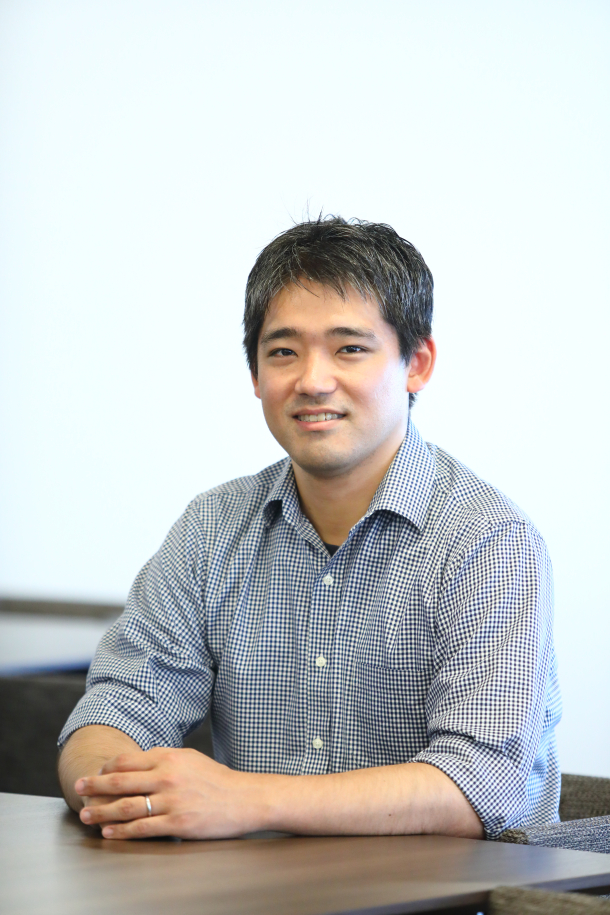
OHMORI, Shunichi (Research Director/Faculty of Science and Engineering)
The short answer is supply-chain management for firms, especially in manufacturing: from procuring raw materials, transporting to production sites, managing inventory in warehouses, and delivering to stores — the whole chain. We also include service-operations management combining sales and consumption.
The environment surrounding manufacturing is especially harsh in Japan now, with layers of complex challenges coinciding — for instance, advances in the so-called Fourth Industrial Revolution, the acceleration of sustainability and social business as symbolized by the SDGs, and rising protectionism following globalization. The pandemic laid bare risks of supply-chain disruption, and with geopolitical risk came a forced reassessment of supply networks.
Especially acute in Japan is the issue of labor shortage. In logistics especially, the so-called “2024 problem” triggered concern over declining transport capability as stricter regulations limited overtime for truck drivers. Not only drivers, but white-collar staff in inventory management and demand forecasting are ageing and leaving the workplace, and the reliance on experienced “intuition” and judgement of veteran workers is catching up with the system.
Amid this backdrop, our mission is to analyze those challenges and examine solutions using knowledge from industrial engineering in order to build the next-generation global production and logistics systems that benefit business and society.
──There seems to be a strong expectation from industry for what academia can bring.
I believe so. Japanese manufacturing once had global leadership, but in recent years the changing environment I mentioned has steadily eroded international competitiveness. In our research we’ve engaged in joint studies and dialogues with top management and supply-chain practitioners at representative Japanese manufacturers. In that process, I’ve felt, more than ever, the rising expectations for academic approaches on how to enact transformation and concrete methods.
What I, personally, have felt from working with many companies is: Japanese firms at the site level have extremely high capabilities and the capacity to improve. Their daily operations are already near optimal, and their accumulated knowledge and efforts are globally enviable.
On the other hand, in our field we have a concept called the “Theory of Constraints”. It states a system’s overall performance is determined by its bottleneck. Like a chain is as strong as its weakest link, an organization or a supply chain is often held back by one constraint.
To achieve dramatic reform, you must change the constraint itself. But that affects other departments or other companies, and may even bring temporary chaos or negative impact, so it is by no means easy.
In that context, I believe the source of future competitiveness for companies is to clearly define the “ideal form” and long-term vision of the company, and advance reform with a whole-system optimization perspective — thereby overcoming that wall.
Our institute’s contribution lies in deeply understanding companies’ visions, organizing decisions into scenarios, building mathematical models and algorithms, and then doing simulations. This allows us to quantitatively show “if this decision is taken, what sort of result will emerge”, and we consider this assistance in strategic decision-making for companies with future foresight to be crucial.
──What specifically do you do in the management-engineering approach?
For example, in joint research with a nationwide restaurant-chain company, we undertook a project to optimize delivery scheduling to stores. Because multiple stores exist in one region, improving logistics efficiency was the challenge. Previously each store hoped for its own delivery time — one wanted morning, another night — so even neighboring stores might receive two separate deliveries (morning and night) in the same area, which is inefficient. If we relax this constraint of delivering at the time each store demands, and align delivery times, then delivery routes can be consolidated, and fewer trucks can serve them.
Now imagine hundreds of stores in one region. Which stores should have their delivery logistics coordinated to yield the greatest efficiency? We built an algorithm and derived the optimum mathematically from among the vast combinations. By not being swayed by each store’s individual situation but enabling headquarters to take an aerial view and coordinate across them, logistics efficiency improved significantly.
However, a theoretically obtained optimum solution doesn’t necessarily fit the reality of problem-solving. There is always a gap between theory and reality, and it’s important to work with companies to close that gap. For example, if you give maximum consideration to each store’s circumstances, how will transport cost, manpower and time be affected? On the flip side, if you prioritize efficiency, how much burden does that place on the stores? Through such simulations we present several options, and let the company make a judgement.
And not only for delivery: supply chains involve many stages, so by viewing them end to end, if you optimize what used to function separately — different departments and companies — even a small improvement can significantly raise efficiency.
──So it’s research while confronting actual challenges in reality.
While we often undertake joint research with companies, we first focus on formulating a ‘research question’ from a societal and academic standpoint. We answer that question using scientific methods, and our mission is to connect our findings to problem-solving in society and to creating new value.
Even in joint research we proceed only after the company understands that we’re targeting topics with large societal impact, not just an individual firm’s issue.
Because it is a ‘significant question’, it must be an unresolved problem. An obvious challenge easily solved with existing solutions or methods does not become a research theme. Therefore, in every joint research we’re always facing new challenges, iterating trials and errors, at times experiencing failure together and building up knowledge.
The field of supply-chain is very broad: from operations at the site, through management strategy, to the economy as a whole. It demands multi-layered perspectives. Because the methods and expertise required differ significantly at each layer, we have researchers from a variety of fields participating in the institute.
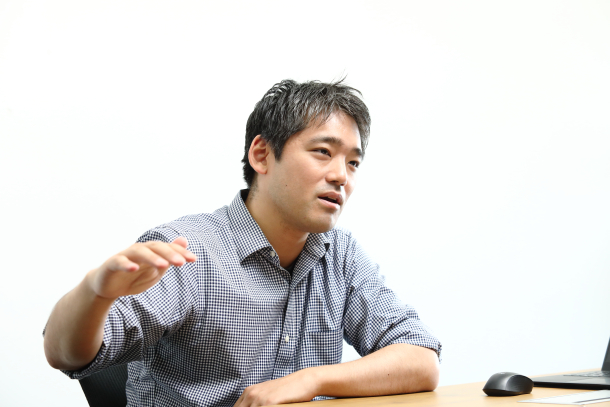
Also, many practitioners from industry join as research members, bringing awareness of real-world issues and business realities to the discussions. With students also joining these talks among specialists from different disciplines and industries, they don’t just learn theory — they directly experience the complexity of real-world operations and the weight of decision-making, which becomes a great growth opportunity for them.
──You have been director of this institute for about three and a half years now. What policy have you taken in your research advancement?”
Including collaboration with companies and overseas researchers, I’ve kept expanding the network. The institute was originally founded in 2002 by my mentor, Professor Kazuho Yoshimoto, a Professor Emeritus of the School of Science and Engineering, with the theme of strengthening the link between production and logistics for productivity improvement. Over 20 years later the environment surrounding corporate management has changed greatly. I believe we should keep daringly taking on new things and systematizing them.
──What new activities have you begun?
We’ve branched out in many areas, but I’ve placed particular emphasis on building communities of practitioners in production and logistics. We’ve held research meetings for manager-class practitioners, meetings for procurement-executives and for logistics-executives — bringing together top runners active in supply-chain management and introducing the latest academic knowledge to them and getting feedback.
We also emphasize overseas collaboration. We work with experts from industry and academia in the USA, Germany, China, Thailand and other countries, learning at various angles about the transformations taking place on the front line of supply chains.
In the U.S. we’ve learned from many advanced cases of supply-chain management. In the “Supply Chain Top 25” published annually by the research firm Gartner, we talk directly with CEOs of companies that are regulars in the list or in the “Masters” category. We gain the opportunity to learn how they drive supply-chain reform and respond to change.
In Germany we’ve visited cutting-edge factory automation and observed industry policy aimed at structural transformation of manufacturing through digital technology — the so-called “Industry 4.0”. Particularly, systems for data linkage between factories and companies and governance design were very suggestive for thinking about future Japanese manufacturing.
In China we visited Shenzhen, sometimes called the “hardware Silicon Valley”, and through entrepreneurs, manufacturing sites, venture capital and accelerators we learned how ideas take shape and grow into business. Through these on-site visits we aim to understand the manufacturing ecosystem that supports innovation and apply that to the future industrial competitiveness of Japan.
Through this practical knowledge, we don’t just learn theory, but we can also understand management decision-making and organizational transformation approaches that are globally applicable. I feel that knowing best practices around the world is extremely important for Japanese companies confronting challenges, in order to relativize those challenges and explore the next direction of reform.
──You said students also participate in your research activities. Are there results on that front too?
Yes. Facing real challenges that companies face, presenting solutions to people at the front line of operations and receiving feedback — for students it is definitely a large gain. We go on study tours to factories, companies and academic institutes domestically and overseas, and prominent practitioners in this field occasionally drop by unannounced, so I believe the stimulation is significant.
Including that, creating a ‘learning ecosystem’ in the field of supply-chain and service-operations management is my goal. For the university: discovery of new research opportunities and growth of students; for industry: acquisition of the latest theory and securing talent; for students: meaningful learning opportunities and paths to career. If a structure that fulfils each of these needs can be made, that would be ideal.
As a result, I hope Japanese manufacturing will regain strength and once again take the lead in solving global issues.
卓越大学院プログラム
「パワー・エネルギー・プロフェッショナル(PEP)育成プログラム」
2026年1月実施の9期生(2026年4月進入・編入)選抜試験(SE)に関する情報を更新致しました。
詳細は、理工学術院HP大学院入試ページの中のPEP SE情報ページ(募集要項・出願書類)をご参照ください。
The Faculty of Science and Engineering brochure is now available! Please click the cover of the brochure above.
卓越大学院プログラム
「パワー・エネルギー・プロフェッショナル(PEP)育成プログラム」
2025年7,8月実施8期生(2025年9月進入・編入)選抜試験(SE)に関する情報を更新致しました。
詳細は、理工学術院HP大学院入試ページの中のPEP SE情報ページ(募集要項・出願書類)をご参照ください。
卓越大学院プログラム
「パワー・エネルギー・プロフェッショナル(PEP)育成プログラム」
2025年1月実施の8期生(2025年4月進入・編入)選抜試験(SE)に関する情報を更新致しました。
詳細は、理工学術院HP大学院入試ページの中のPEP SE情報ページ(募集要項・出願書類)をご参照ください。
We’re proud to bring you Waseda Universty’s Research Recap 2024. The video highlights just a few of the many innovators who conducted influential research at our university over the past year. Watch for a peek at their diverse research covering everything from self-healing interconnects and airborne microplastics to conversational AI media systems and hydrogen storage materials.
If you wish to find out more about the extensive activities at our University, click on one of the links that follow in the description. Thanks to all the students and professors who put their research on display for this video.
Research Theme: Economic development and environmental conservation in developing countries
Recent Research: https://www.waseda.jp/inst/research/news-en/76941
Researcher Details: https://w-rdb.waseda.jp/html/100001339_en.html
2022 WASEDA research acceleration program for early-stage principal investigators
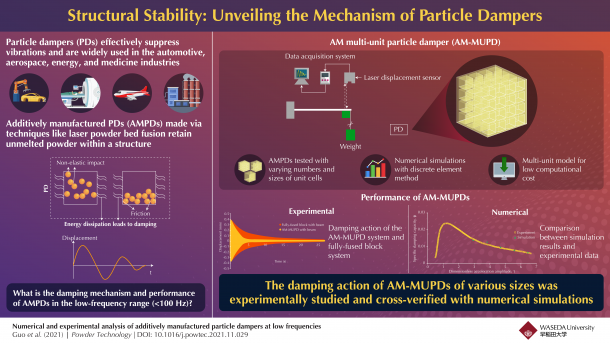
Research Theme: Development of additive manufactured functional structure
Recent Research: https://www.waseda.jp/inst/research/news-en/76856
Researcher Details: https://w-rdb.waseda.jp/html/100002014_en.html
The recipients of the 2022 Waseda Research Award
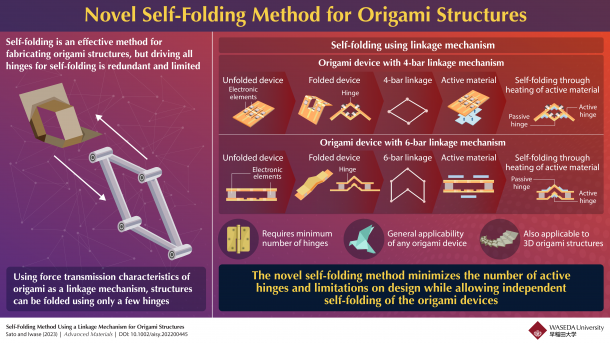
Research Theme: Micro-electro-mechanical systems
Recent Research: https://www.waseda.jp/inst/research/news-en/76980
Researcher Details: https://w-rdb.waseda.jp/html/100001156_en.html
The recipients of the 2016 Waseda Research Award
2023 Next-generation Core researcher
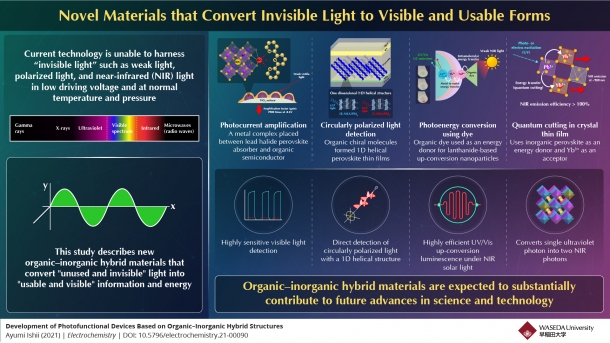
Research Theme: Inorganic materials chemistry
Recent Research: https://www.waseda.jp/inst/research/news-en/76941
Researcher Details: https://w-rdb.waseda.jp/html/100003644_en.html
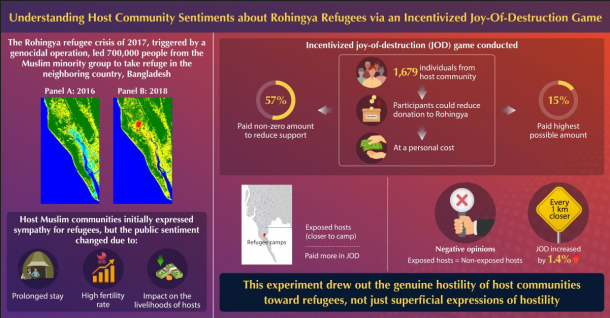
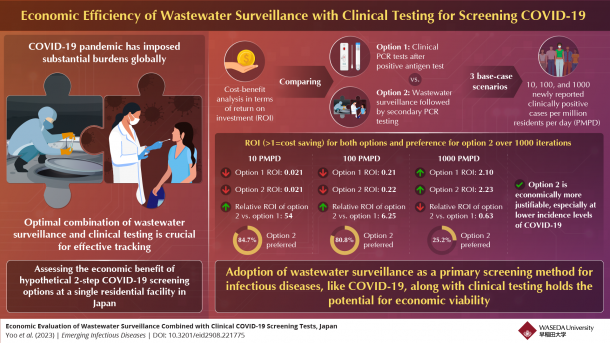
Research Theme: Public health, Infectious diseases, Health education
Recent Research: https://www.waseda.jp/inst/research/news-en/76882
Researcher Details: https://w-rdb.waseda.jp/html/100003620_en.html
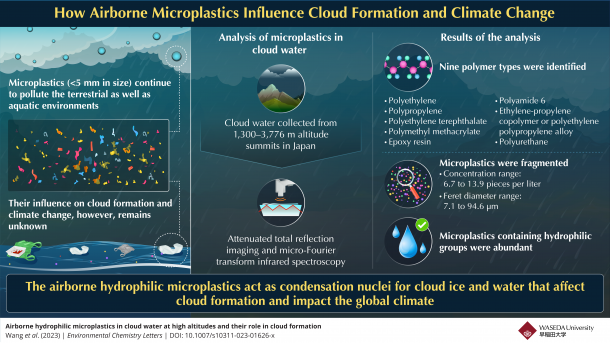
Research Theme: Environmental Chemistry
Recent Research: https://www.waseda.jp/top/en/news/78501
Researcher Details: https://w-rdb.waseda.jp/html/100000728_en.html
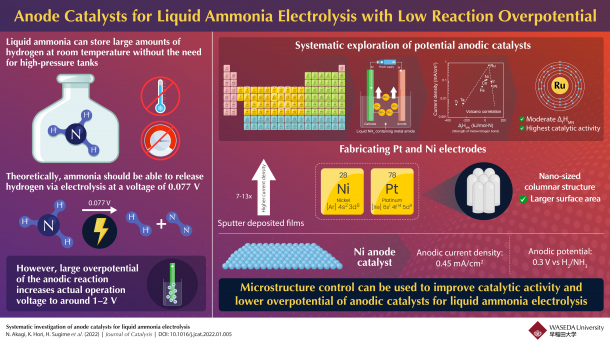
Research Theme: Energy material science, chemical reaction and energy process engineering
Recent Research: https://www.waseda.jp/inst/research/news-en/76960
Researcher Details: https://w-rdb.waseda.jp/html/100001495_en.html
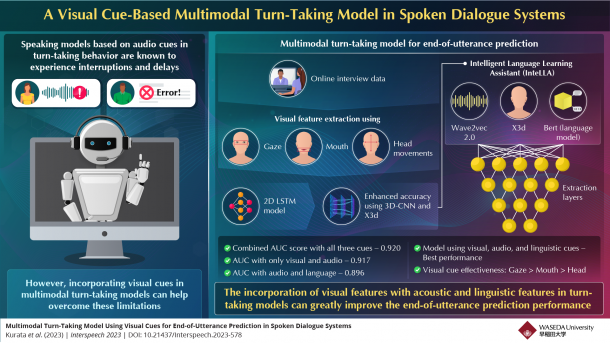
Research Theme: Conversational AI media systems
Recent Research: https://www.waseda.jp/inst/research/news-en/76861
Researcher Details: https://www.yoichimatsuyama.com/about/
Research Theme: Safety and performance optimization
Recent Research: https://www.waseda.jp/inst/research/news-en/76832
Researcher Details: https://w-rdb.waseda.jp/html/100001822_en.html
============================================
You Tube https://www.youtube.com/@wasedaPR
Instagram https://www.instagram.com/waseda_university/
LinkedIn https://www.linkedin.com/school/wasedauniversity/
Facebook https://www.facebook.com/WasedaU
X(Twitter) https://twitter.com/waseda_univ
While antisense oligonucleotide and aptamer drugs have been on the market since the 2000s, it was not until the development of SARS-CoV2 mRNA vaccines employed to fight against the COVID-19 pandemic that RNA-based therapeutics attracted the attention of the general public.
In contrast, because of their immense potential—not only for medical applications but for basic biological research and biotechnology—RNA engineering has been on the scientific forefront for decades. As such, there is a tremendous interest in revolutionizing current approaches for designing RNA sequences. Remarkably, there is still no versatile computational platform for functional RNA design. Most existing approaches function by reconstructing specific secondary structures or are restricted to particular types of sequences, such as CRISPR gRNA, mRNA, or specific riboswitches. Since these traditional approaches typically depend on predicting and optimizing RNA secondary structures, their accuracy is inherently constrained by structural prediction and optimization algorithms. A novel approach was thus necessary to avoid these limitations and produce powerful and robust computational methods to construct RNA with desired functions.
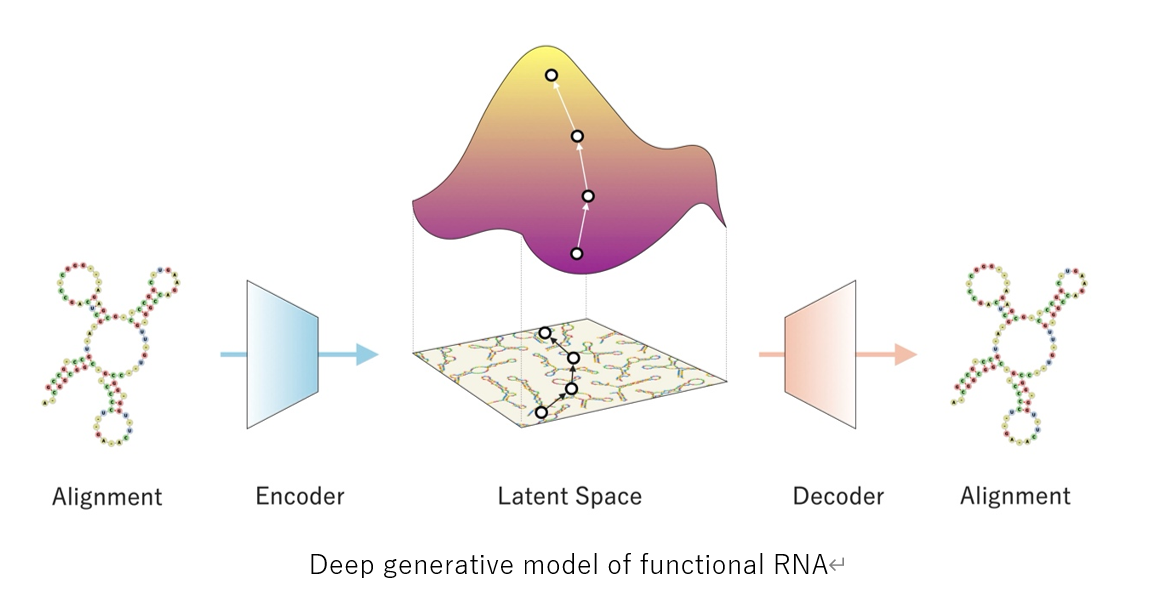
The research team aimed to avoid these problems by focusing on RNA families, which are sequence groups with thousands of functional RNAs endowed with identical functions. Even with only a few hundred sequences, multiple sequence alignment can create a consensus secondary structure from which new sequences can be generated. As this computational platform theoretically works with any functional RNA families, the researchers named their deep generative model the RNA family sequence Generator, or RfamGen, which is the world’s first deep generative model for functional RNA design.
RfamGen combines two approaches: (1) covariance model and (2) variational autoencoder. The covariance model is a type of statistical framework for RNA alignment and consensus secondary structure that quantitatively evaluates variations of sequence and structure. Meanwhile, the variational autoencoder is a deep generative model with an internal representation called “latent space” to mitigate the complexity associated with exploring the exponentially vast sequence space for the optimization of RNA sequences. By leveraging these two concepts, the researchers generated a system that learns sequence and structural information to explore new RNA designs logically, a feat that has never been done previously.
The team first compared RfamGen, which considers both alignment and secondary structural information, with models accounting for either alignment or secondary structural information, or neither.
For the 18 RNA families tested (each with alignments comprised of at least 10,000 sequences), RfamGen showed a significantly improved ability to generate high-quality RNA sequences. Furthermore, the researchers also tested RfamGen’s capabilities when restricted to a limited number of input sequences from which to learn. Despite only being trained on 500 input sequences, RfamGen successfully generated RNA sequences with high scores, thus demonstrating its efficient generative capacity.
The researchers next trained RfamGen using 629 RNA families in total, each with at least 100 sequences from the Rfam database, and found RfamGen performs substantially better compared to other systems. The researchers, furthermore, evaluated how well generated RNA sequences function by randomly synthesizing several RNA sequences generated from training it with a diversity of self-cleavage ribozymes and from random sampling a covariance model. Notably, the sequences generated by RfamGen showed enzymatic activity, while the randomly sampled sequences did not, indicating RfamGen learned important features essential for functionality from the training data.
Lastly, the research team utilized the ligand-dependent self-cleavage activity of the glmS ribozyme as a comparative platform to benchmark generated sequences by RfamGen to natural glmS sequences. They first trained RfamGen using about 500 natural glmS ribozyme sequences and sampled the “latent space” to obtain 1,000 generated sequences. Using a massively parallel assay, they tested these 1,000 generated sequences, 761 natural sequences in the glmS ribozyme family (RF00234), and 100 sequences with kinetic measurements from a previous report. Not only did the team observe the generated sequences to possess a similar distribution of cleavage kinetics as natural sequences, but remarkably found that generated sequences showed higher cleavage rates compared to natural sequences, thus suggesting RfamGen successfully generates high-quality sequences with comparable or higher efficiency than some natural sequences.
The golden age of RNA-based bioengineering is on the horizon. By constructing this deep generative model for functional RNA design, the research team believes RfamGen will be a fundamental driving force to propel RNA biology into a new era and enable discoveries and applications based on RNA.
Nature Methods
Deep generative design of RNA family sequences
Shunsuke Sumi1,2,3, Michiaki Hamada3,4,5,*, Hirohide Saito1,*
* : Corresponding authors
