リーディングビュー

SCO Linux FUDは滅びぬ、何度でも蘇るさ!

あるAnonymous Coward 曰く、

slashdot.org記事より:
かつて、今は亡きSCOグループがぶち上げた「Linuxはウチが権利を持っているUNIXのパクリ」という論争がありました。
およそ13年に渡ってLinux界隈を恐怖のズンドコに陥れたこの騒動では、パクリの証拠が提示されることがなかったどころか、そもそもSCOがUNIXの権利を有していないことが判明します。
論争は終結し、SCOは滅びました。
そう、終結した、はずだったのです……。
しかし今、再びこのFUDは蘇りました。SCOからUNIX関連の権利を受け継いだXinuosによって!

SCO Linux FUD returns from the dead | ZDNet

そもそも、Xinuosは「俺ら、IBMとの訴訟なんか興味ないけんね(意訳)」と言っていたはずなのですが。
現時点で判明している主張はSCO時代のものとさして変わらない模様。
ただ初期のUNIXコードではなく、1995/9/19以降のUnixWare 7 / OpenServer 5~6 がパクリ元だという主張のようです。
果たして、再び論争は巻き起こるのでしょうか。

# なお、お疑いの貴兄もいらっしゃるでしょうが、残念ながらエイプリルフールではない模様。

情報元へのリンク

すべて読む | Linuxセクション | Linux | この記事をTwitterでつぶやく この記事をFacebookで共有 この記事をGoogle Plusで共有 このエントリーをはてなブックマークに追加

関連ストーリー:
SCO問題、やっと終了へ 2016年03月04日
CP/Mの商標が2012年に出願されていた 2014年02月25日
Unix著作権を巡って、SCOまたまた Novell に敗訴 2011年09月02日
「UNIX のコードが Linux にコピーされた証拠」なるものを SCO 関連の弁護士が公開 2010年07月13日

  •  

Linux Foundation、Linux 30周年記念ロゴ画像を公開

Linuxが今年で30周年となるのを記念し、ソーシャルメディアへの投稿やモバイルデバイスの壁紙に利用可能な記念ロゴ画像をLinux Foundationが公開している(特設ページ)。

これについて あるAnonymous Coward 曰く、

Linux が30歳になったそうだ(日付はもう少し後な気がするが)。

最初の公開版(0.01)は、i386コンピュータの一部でしか動作せず、フロッピー/ハードディスクとシリアルポートくらいしか使えず、スーパーユーザしかおらず、スウェーデン語キーボード直指定で、少し長く使うとハングアップしてしまう、ネットワークもGUIも無い小さなOSだったが、30年経った今は使われてない分野を探すのが難しいほどに普及している。

Linux FoundationではLinus Torvalds氏がLinuxの開発を発表した1991年8月25日と最初のバージョンを公開した1991年10月5日を記念日とマークしている。

すべて読む | Linuxセクション | Linux | この記事をTwitterでつぶやく この記事をFacebookで共有 この記事をGoogle Plusで共有 このエントリーをはてなブックマークに追加

関連ストーリー:
ESR曰く、WindowsはそのうちLinuxカーネルになる 2020年09月30日
Linuxカーネル、25周年 2016年08月27日
Linuxデスクトップの普及を目指すLinus Torvalds 2016年04月12日
「GNU宣言」発表から30周年を迎える 2015年03月21日
Linus Torvalds氏、Windows 3.11のリリースから20周年をLinux 3.11-RC5のリリースで祝う 2013年08月14日
Microsoft、Linux 20 周年に好意的なメッセージを送る 2011年07月29日
Linux 20 周年、Linux Foundation が特設ページを公開 2011年04月13日
Linux Foundation エグゼクティブ・ディレクターの強気発言、マイクロソフトはもはや敵ではない 2011年04月08日

  •  

What's the Best Linux Distro for Enhanced Privacy and Security?

Slashdot reader b-dayyy quotes the Linux Security blog: While all Linux 'distros' — or distributed versions of Linux software — are secure by design, certain distros go above and beyond when it comes to protecting users' privacy and security. We've put together a list of our favorite specialized secure Linux distros and spoken with some of their lead developers to find out first-hand what makes these distros so great. This "favorites" list cites six "excellent specialized secure Linux distros." Some highlights from the article: In a conversation with the LinuxSecurity editors, Qubes OS Community Manager Andrew David Wong elaborated, "Rather than attempting to fix all of the security bugs in software, Qubes assumes that all software is buggy and compartmentalizes it accordingly, so that when flaws are inevitably exploited, the damage is contained and the user's most valuable data is protected." A Kali Linux contributor provides some insight into the distro's history and the benefits it offers users: "Named after a Hindu goddess, Kali has been around for a long time — but it's still updated weekly, can be run in live mode or installed to a drive, and can also be used on ARM devices like Raspberry Pi." Obviously there's strong opinions among Slashdot readers. So share your own thoughts in the comments. What's the best Linux distro for enhanced privacy and security?

Read more of this story at Slashdot.

  •  

Kali Linux 2021.1 Released: Tweaked DEs and Terminals, New Tools, Silicon Macs

Slashdot reader Finuz writes: Offensive Security has released Kali Linux 2021.1, the latest version of its popular open source penetration testing platform. You can download it or upgrade to it. Kali NetHunter, the distro's mobile pentesting platform, now has an upgraded BusyBox engine and tools updated to the latest version (or, in some cases, completely rewritten). There are two new Kali ARM images: one that can be used with VMs on Apple Silicon Macs (Apple M1) and the other for the Raspberry Pi 400's wireless card.

Read more of this story at Slashdot.

  •  

2人の子供がLinux Mintのスクリーンロックを突破

Linuxディストリビューション「Linux Mint」で特定の手順を使うと「スクリーンセーバー時に画面をロックする」設定を解除可能なことが分かった(GitHubGIGAZINE)。発見者はrobo2bobo氏の子どもたちで、ロック解除に必要な手順は以下の通り。

  1. システムをスクリーンロックする。
  2. 仮想キーボードをクリックする。
  3. 仮想キーボードを連打しながら物理キーボードも連打する。2つのキーボードは同時に連打し、押すキーは多ければ多いほど良い。

この手法ではスクリーンロックそのものが解除されるのではなく、スクリーンロックのプロセスが強制終了することにより発生するのだという。再現性もあるが、連打速度などの関係から同氏一人だけでは再現できず、子どもの手が4本以上必要だったとのこと。すでに問題はLinux Mintプロジェクト側に伝わっており、1月13日付けで問題は修正されているとのこと。

すべて読む | Linuxセクション | Linux | この記事をTwitterでつぶやく この記事をFacebookで共有 この記事をGoogle Plusで共有 このエントリーをはてなブックマークに追加

関連ストーリー:
9月のデスクトップOSシェア、4月以降増加していたLinuxが大幅減 2020年10月04日
sudoに10年以上前から存在した特権昇格の脆弱性が修正される 2020年02月08日
Ubuntuは過去の存在か? 2018年10月18日
公開から4年、SteamOSの先行きは? 2017年12月16日
WPA2の脆弱性「KRACK」の対策が進む 2017年10月18日
Linux MintのWebサイトが改ざん、バックドア付きISOのダウンロードリンクに書き換えられる 2016年02月23日
「Linux MintがDebianベースになる」という噂、開発者が否定 2015年04月10日

  •  

CentOSが開発方針を変更し「CentOS 8」は2021年末に終了。その後はCentOS Stream開発に注力

esuta 曰く、

RHEL クローンとして広く使われている CentOS 8 の EOL が急遽
2021-12-31 となることが発表された。従来の予告は 2029-05-31
必要な場合は CentOS Stream に移行してほしいとの由
なお CentOS 7 の EOL は 2024-06-30 のまま変わらない

寝耳に水の発表で、企業系ユーザが多い CentOS の EOL が
突然あと一年となったことは影響が大きいだろう

おまけ CentOS 8 -> CentOS Stream に移行する方法
https://www.centos.org/centos-stream/

情報元へのリンク

CentOSプロジェクトは12月8日、現行のCentOS Linux 8を2021年12月31日に開発終了することを発表した。プロジェクトチームは開発リソースをCentOS Streamに集中させるとしている。CentOS 8ユーザーはCentOS Stream 8への移行を推奨するとのこと。CentOS Linux 8を使用しており、CentOS Streamがニーズに適合しない場合は、Red Hatに相談するよう求めている(Blog.CentOS.org FAQ-CentOSRed HatOSDN MagazineマイナビGIGAZINELife-cycle Dates)。

すべて読む | Linuxセクション | Linux | この記事をTwitterでつぶやく この記事をFacebookで共有 この記事をGoogle Plusで共有 このエントリーをはてなブックマークに追加

関連ストーリー:
Linuxディストロ別のsnapトップ5、spotifyが人気 2019年09月23日
世界スパコンランキング2017年11月版発表、海洋研究開発機構の「暁光」が4位に 2017年11月15日
LinuxをターゲットにしたCIAのマルウェア「OutlawCountry」 2017年07月04日
Amazon EC2でもっとも人気のあるOSはUbuntu 2015年09月02日
米NSA、オープンソースのセキュリティー管理プラットフォーム「SIMP」を公開 2015年07月19日
サーバー向けLinuxディストリビューションのおすすめは? 2014年11月21日

  •  

SiFive Unveils Plan For Linux PCs With RISC-V Processors

✇Slashdot
著者: BeauHD
SiFive today announced it is creating a platform for Linux-based personal computers based on RISC-V processors. VentureBeat reports: Assuming customers adopt the processors and use them in PCs, the move might be part of a plan to create Linux-based PCs that use royalty-free processors. This could be seen as a challenge to computers based on designs from Intel, Advanced Micro Devices, Apple, or Arm, but giants of the industry don't have to cower just yet. The San Mateo, California-based company unveiled HiFive Unmatched, a development design for a Linux-based PC that uses its RISC-V processors. At the moment, these development PCs are early alternatives, most likely targeted at hobbyists and engineers who may snap them up when they become available in the fourth quarter for $665. The SiFive HiFive Unmatched board will have a SiFive processor, dubbed the SiFive FU740 SoC, a 5-core processor with four SiFive U74 cores and one SiFive S7 core. The U-series cores are Linux-based 64-bit application processor cores based on RISC-V. These cores can be mixed and matched with other SiFive cores, such as the SiFive FU740. These components are all leveraging SiFive's existing intellectual property portfolio. The HiFive Unmatched board comes in the mini-ITX standard form factor to make it easy to build a RISC-V PC. SiFive also added some standard industry connectors -- ATX power supplies, PCI-Express expansion, Gigabit Ethernet, and USB ports are present on a single-board RISC-V development system. The HiFive Unmatched board includes 8GB of DDR4 memory, 32MB of QSPI flash memory, and a microSD card slot on the motherboard. For debugging and monitoring, developers can access the console output of the board through the built-in microUSB type-B connector. Developers can expand it using PCI-Express slots, including both a PCIe general-purpose slot (PCIe Gen 3 x8) for graphics, FPGAs, or other accelerators and M.2 slots for NVME storage (PCIe Gen 3 x4) and Wi-Fi/Bluetooth modules (PCIe Gen 3 x1). There are four USB 3.2 Gen 1 type-A ports on the rear, next to the Gigabit Ethernet port, making it easy to connect peripherals. The system will ship with a bootable SD card that includes Linux and popular system developer packages, with updates available for download from SiFive.com. It will be available for preorders soon. For some more context: Could RISC-V processors compete with Intel, ARM, and AMD?

Read more of this story at Slashdot.

  •  

Linux 5.10 Solves the Year 2038 Problem Until 2486

The Linux 5.10 kernel's XFS file-system will have two new on-disk meta-data capabilities, reports Phoronix: 1. The size of inode btrees in the allocation group is now recorded. This is for increasing redundancy checks and also allowing faster mount times. 2. Support for timestamps now until the year 2486. This "big timestamps" feature is the refactoring of their timestamp and inode encoding functions to handle timestamps as a 64-bit nanosecond counter and bit shifting to increase the effective size. This now allows XFS to run well past the Year 2038 problem (where storing the time since 1970 in seconds will no longer fit in a signed 32-bit integer and thus wraparound) to now the Year 2486. Making a new XFS file-system with bigtime enabled allows a timestamp range from December 1901 to July 2486 rather than December 1901 to January 2038. For preserving backwards compatibility, the big timestamps feature is not currently enabled by default.

Read more of this story at Slashdot.

  •  

Linux 5.9 Boosts CPU Performance With FSGSBASE Support

FSGSBASE support in Linux "has the possibility of helping Intel/AMD CPU performance especially in areas like context switching that had been hurt badly by Spectre/Meltdown and other CPU vulnerability mitigations largely on the Intel side," Phoronix wrote back in August. As it started its journey into the kernel, they provided a preview on August 10: The FSGSBASE support that was finally mainlined a few days ago for Linux 5.9 is off to providing a nice performance boost for both Intel and AMD systems... FSGSBASE support for the Linux kernel has been around a half-decade in the making and finally carried over the finish line by one of Microsoft's Linux kernel engineers... FSGSBASE particularly helps out context switching heavy workloads like I/O and allowing user-space software to write to the x86_64 GSBASE without kernel interaction. That in turn has been of interest to Java and others...On Linux 5.9 where FSGSBASE is finally mainlined, it's enabled by default on supported CPUs. FSGSBASE can be disabled at kernel boot time via the "nofsgsbase" kernel option. Today on the Linux kernel mailing list, Linus Torvalds announced the release of Linux 5.9: Ok, so I'll be honest - I had hoped for quite a bit fewer changes this last week, but at the same time there doesn't really seem to be anything particularly scary in here. It's just more commits and more lines changed than I would have wished for. And Phoronix reported: Linux 5.9 has a number of exciting improvements including initial support for upcoming Radeon RX 6000 "RDNA 2" graphics cards, initial Intel Rocket Lake graphics, NVMe zoned namespaces (ZNS) support, various storage improvements, IBM's initial work on POWER10 CPU bring-up, the FSGSBASE instruction is now used, 32-bit x86 Clang build support, and more. See our Linux 5.9 feature overview for the whole scoop on the many changes to see with this kernel.

Read more of this story at Slashdot.

  •  

Will New Object Storage Protocol Mean the End For POSIX?

"POSIX has been the standard file system interface for Unix-based systems (which includes Linux) since its launch more than 30 years ago," writes Enterprise Storage Forum, noting the POSIX-compliant Lustre file system "powers most supercomputers." Now Slashdot reader storagedude writes: POSIX has scalability and performance limitations that will become increasingly important in data-intensive applications like deep learning, but until now it has retained one key advantage over the infinitely scalable object storage: the ability to process data in memory. That advantage is now gone with the new mmap_obj() function, which paves the way for object storage to become the preferred approach to Big Data applications. POSIX features like statefulness, prescriptive metadata, and strong consistency "become a performance bottleneck as I/O requests multiply and data scale..." claims the article. "The mmap_obj() developers note that one piece of work still needs to be done: there needs to be a munmap_obj() function to release data from the user space, similar to the POSIX function."

Read more of this story at Slashdot.

  •  

Microsoft Is Bringing Edge To Linux

✇Slashdot
著者: msmash
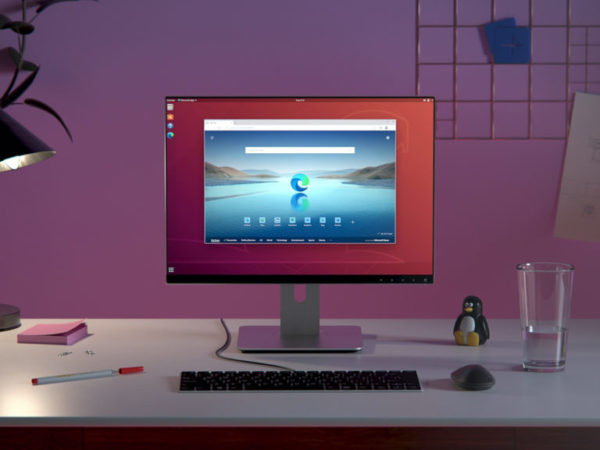
Krystalo writes: Edge is finally coming to Linux. At Ignite 2020 today, Microsoft announced that Edge for Linux will be available in the Dev preview channel starting in October. Linux users will be able to download the preview from the Microsoft Edge Insider website or from their native Linux package manager. Microsoft will start with the Ubuntu and Debian distributions, with support for Fedora and openSUSE coming afterwards. "Linux stands out in that, while it has a relatively small desktop population in terms of what you might call typical consumer or end user, developers are often overrepresented in that population, and especially in areas like test automation, or CI/CD workloads for their web apps," Edge program manager Kyle Pflug told VentureBeat. "Edge on Linux is a natural part of our strategy to reduce fragmentation and test overhead for web developers. By providing the same rendering behavior and tools across platforms, developers can build and test sites and web apps in their preferred environment and be confident in the experience their customers will have."

Read more of this story at Slashdot.

  •  

Kaspersky Warns Intruders are Targeting Linux Workstations and Servers

Researchers at Kaspersky "have warned that sophisticated hackers and crooks are increasingly targeting Linux-based devices — using tools specifically designed to exploit vulnerabilities in the platform," reports TechRepublic: While Windows tends to be more frequently targeted in mass malware attacks, this is not always the case when it comes to advanced persistent threats (APTs), in which an intruder — often a nation-state or state-sponsored group — establishes a long-term presence on a network. According to Kaspersky, these attackers are increasingly diversifying their arsenals to contain Linux tools, giving them a broader reach over the systems they can target. Many organisations choose Linux for strategically important servers and systems, and with a "significant trend" towards using Linux as a desktop environment by big business as well as government bodies, attackers are in turn developing more malware for the platform... According to Kaspersky, over a dozen APT actors have been observed to use Linux malware or some Linux-based modules. Most recently, this has included the LightSpy and WellMess malware campaigns, both of which targeted both Windows and Linux devices. The LightSpy malware was also found to be capable of targeting iOS and Mac devices. While targeted attacks on Linux-based systems are still uncommon, a suite of webshells, backdoors, rootkits and custom-made exploits are readily available to those that seek to use them. Kaspersky also suggested that the small number of recorded attacks was not representative of the danger they posed, pointing out that the compromise of a single Linux server "often leads to significant consequences", as the malware travelled through the network to endpoints running Windows or macOS, "thus providing wider access for attackers which might go unnoticed".

Read more of this story at Slashdot.

  •  

Linux版1PasswordのDeveloper Preview版がようやく登場

あるAnonymous Coward 曰く、

パスワードマネージャー「1Password」のLinux版Developer Previewが公開されたそうだ(BetaNews1PasswordフォーラムSnapcraftマイナビ)。

これまでLinux向けに関しては、Webブラウザ用のプラグインしかなかった。今回公開されたDeveloper Previewは、開発元であるAgilebits謹製の初のLinux版ネイティブアプリ。ただし、AgilbitsのDave Teare氏によると、この最初のリリースはテストと検証の目的で作られたものであり、まだ多くの機能が未完成であるとしている。今後数か月間で多くの更新と変更が予想されるため、ビジネスクリティカルな環境には適していないとしている。

すべて読む | Linuxセクション | Linux | セキュリティ | この記事をTwitterでつぶやく この記事をFacebookで共有 この記事をGoogle Plusで共有 このエントリーをはてなブックマークに追加

関連ストーリー:
Firefox 77ではテキスト入力フィールドにmaxlengthを超える文字列を貼り付けた時に自動で切り詰められなくなる 2020年05月21日
トレンドマイクロの「パスワードマネージャー」に情報漏えいにつながる可能性のある脆弱性 2020年01月20日
2018年パスワードを正しく使用していない人・団体ランキング発表。1位はカニエ・ウェスト、2位は米国防総省 2018年12月14日
Kaspersky曰く、「iOS向けアンチウイルスソフト」は存在しない 2018年09月28日

  •  
❌