リーディングビュー

「細菌とファージの攻防」(2022/4/16)

演題:細菌とファージの攻防


日時:2022年4月16日(土) 9:30 – 11:00


会場:オンライン(Zoom)による開催


講師:大塚 裕一(埼玉大学  理学部  分子生物学科・准教授)


対象:学部生・大学院生、教職員、学外者、一般の方


参加方法:参加希望者は[email protected] (常田)まで連絡してください。

参加のためのZOOM情報をご連絡します。


主催:早稲田大学 先進理工学研究科 生命医科学専攻


問合せ:早稲田大学 理工センター 総務課


TEL:03-5286-3000

  •  

「高分子から原子の世界へ ー原子を混ぜてみようー」(2022/3/28)

演題:高分子から原子の世界へ ー原子を混ぜてみようー


日時:2022年3月28日(月) 10:00 – 11:30


会場:西早稲田キャンパス 55N号館 1階 第二会議室


講師:山元 公寿(東京工業大学 教授)


対象:学部生・大学院生、教職員、学外者、一般の方


参加方法:入場無料、直接会場へお越しください。


主催:早稲田大学 先進理工学研究科 応用化学専攻


問合せ:早稲田大学 理工センター 総務課


TEL:03-5286-3000

  •  

「100年企業におけるデジタルトランスフォーメーションの挑戦」(2022/3/19)

演題:100年企業におけるデジタルトランスフォーメーションの挑戦


日時:2022年3月19日(土)13:15-14:45


会場:ZOOMによるオンライン講演会


講師:黒川 博史(ライオン株式会社DX推進部長)


対象:学部生・大学院生、教職員、学外者、一般の方


参加方法:参加ご希望の方はメールにて前々日までに [email protected] まで連絡してください。

参加のためのZoom 情報をご連絡します。なお、メールのタイトルは「3/19イベント申し込み」としてください。


主催:先進理工部 化学・生命化学科


問合せ:早稲田大学 理工センター 総務課


TEL:03-5286-3000

  •  

新入生学生証配付時間・場所(2022/4/1)

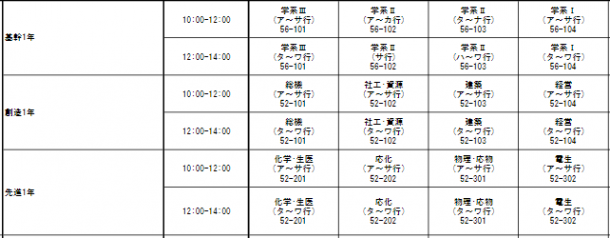
4/1に学生証を配布します(感染拡大防止のため、配付時間を分割しております。)。学生証の受け取りは本人に限り、郵送はいたしかねます。学部生は「受験票」、大学院生は「公的身分証明書(運転免許証、パスポート、在留カード)」を必ず持参のうえ、指定の場所・時間帯にお受け取りください。また、開始直後は混みあいますので、滞留が生じないよう分散しての来場にご協力ください。

※定期券は、学生証受け取り後、購入可能です。届出住所の変更を要する場合は、MyWasedaを経由しての届出が承認された後、裏面シールの再発行が必要です(Support Anywhere「各種申請・変更手続き」)。
急な体調不良などによる欠席の連絡は不要です。やむを得ない事情により受け取れなかった場合に限り、4/4以降、西早稲田キャンパス51号館1階理工学統合事務所教学支援課カウンターにてお渡しします(4/2-3は、受け取れません)。学部生は「受験票」、大学院生は「公的身分証明書(運転免許証、パスポート、在留カード)」を持参のうえ、事務取扱時間内にお受け取りください。
共同大学院の他大学(東京女子医科大学・東京農工大学・東京都市大学)本属学生の方は、早稲田大学学生証およびWaseda IDを専攻の指示にしたがってお受け取りください。

学部生

大学院生


  •  

「第16 回未来エネルギーフォーラムシンポジウム」(2022/3/14)

演題:原子力エネルギー利用と安全研究の最前線


日時:2022年3月14日(月)13:00~17:30


会場:西早稲田キャンパス 63 号館 2 階 02 教室

オンライン(Zoom)のハイブリッド同時開催


対象:学部生・大学院生、教職員、学外者、一般の方


参加方法:参加無料、事前申込制


事前申込先:【申込期限:2022 年 3 月 7 日】

以下の Google フォームより参加申し込みください。

https://forms.gle/Fajbq7SapsBY2nfX6

現在、新規参加お申込みはオンライン参加に限定させて頂いております。


主催:先進理工学研究科 共同原子力専攻


問合せ:早稲田大学 理工センター 総務課


TEL:03-5286-3000

  •  

在学生学生証裏面シール配付時間・会場/New backside sticker for AY 2022 of your Student ID card for current students(3/18・4/2)

*English version follows Japanese


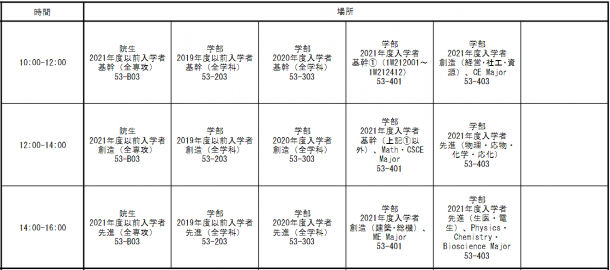
3/18に配布します。感染拡大防止のため時間を分割しますので、指定の時間帯および教室でお受け取りください。開始直後は混みあいますので、滞留が生じないよう分散して来場するようご配慮ください。

※共同大学院他大学(東京女子医科大学・東京農工大学・東京都市大学)本属学生の方は、専攻の指示に従ってお受け取りください。

※急な体調不良などによる欠席の連絡は不要です。3/18に来られない場合は、4/2の同時間帯・会場で実施する2回目にお受け取りください(3/19~4/1の期間はお渡しできません)。2回とも参加できない場合は、4/4以降、51号館1階教学支援課カウンターにてお受け取りください(郵送はいたしかねます)。

※学生証をまだ受け取っていない方は、教学支援課カウンターで学生証を受け取ってから、裏面シールをお受け取りください(学生証の郵送はいたしかねます)。

※住所変更が生じている方は、以下の手順でご対応ください。
(1)MyWasedaから住所変更を申請(Support Anywhere「各種申請・変更手続き」)
(2)学生証裏面シールを受け取り
(3)51号館1階教学支援課カウンターにて裏面シールを交換

配付スケジュール・場所一覧


New backside sticker for AY 2022 of your Student ID card

New backside sticker for your student ID will be distributed on March 18, within the period designated for each group/major. Below schedule is arranged for the infection prevention, thus your cooperation to be at your designated period would be highly appreciated.

*It is not necessary to inform us of absences due to sudden illness or other reasons. In case March 18 is not convenient for you, please pick it up on April 2. The venue and the time frame for each group/major remain the same as March 18. (You cannot receive new backside sticker from March 19 to April 1.) If you are unable to attend both sessions, please pick up it after April 4  at “Academic and Student Affairs Section at the Center for Science and Engineering” at the grand floor of the Bldg. 51, Nishi-Waseda Campus (ONLY receive it at counter, no postal service).

*If you have not received your student ID card yet, please pick up it before each session (the list below) at “Academic and Student Affairs Section at the Center for Science and Engineering” at the grand floor of the Bldg. 51, Nishi-Waseda Campus (ONLY receive it at counter, no postal service).

*If you have changed your address, please follow the steps below:
(1) Request a change of address via MyWaseda.
(2) Receive your new backside sticker.
(3) Exchange the sticker at “Academic and Student Affairs Section at the Center for Science and Engineering” at the grand floor of the Bldg. 51, Nishi-Waseda Campus.

[Undergraduate]Enrollees of 2021

#401 of Bldg.53

12:00-14:00 Math/CSCE Major
14:00-16:00 ME Major

#403 of Bldg.53

10:00-12:00 CE Major
14:00-16:00 Phys/Chem/Bio Major

[Undergraduate]Enrollees of 2020

#303 of Bldg.53

10:00-12:00 School of Fundamental Science and Engineering
12:00-14:00 School of Creative Science and Engineering
14:00-16:00 School of Advanced Science and Engineering

[Undergraduate]Enrollees of 2019 (or before)

#203 of Bldg.53

10:00-12:00 School of Fundamental Science and Engineering
12:00-14:00 School of Creative Science and Engineering
14:00-16:00 School of Advanced Science and Engineering

For All Graduate Students

#B03 of Bldg.53

10:00-12:00 Graduate School of Fundamental Science and Engineering
12:00-14:00 Graduate School of Creative Science and Engineering
14:00-16:00 Graduate School of Advanced Science and Engineering (*Please follow the instruction from the department if there is any.)

  •  

「ウイルス性肝炎とその基礎開発研究」(2022/3/14)

演題:ウイルス性肝炎とその基礎開発研究


日時:2022年3月14日(木)月16:30-18:00


会場:Zoomによるオンライン講演会


講師:村松 正道(国立感染症研究所 ウイルス第二部 部長)


対象:学部生・大学院生、教職員、学外者、一般の方


参加方法:参加無料、事前申込制


事前申込先:[email protected]

「お名前」「所属」「メールアドレス」「講演会参加の目的」を明記下さい。

早稲田大学の学生の場合は、学籍番号もご記入ください。

申し込みいただいた方に、zoomアドレスをお送りします。


主催:先進理工学部 生命医科学科


問合せ:早稲田大学 理工センター 総務課


TEL:03-5286-3000

  •  

「Part of speech knowledge of Japanese EFL learners」(2022/2/28)

演題:Part of speech knowledge of Japanese EFL learners


日時:2022年2月28日(月)13:30-14:30


会場:Zoomによるオンライン講演会


講師:石井 友子(明治学院大学 准教授)


対象:学部生、大学院生、教職員、学外者、一般の方


参加方法:参加無料、事前申込制


事前申込先:Https://forms.office.com/r/HVyFfNzHjD


申込締切:2022年2月27日(日) 17:00


主催:英語教育センター


問合せ:早稲田大学 英語教育センター

ラルフ・ローズ

[email protected]


  •  

「何が見えるか?何をするか?~ある有機化学者の自由な発想」(2022/3/3)

演題:何が見えるか?何をするか?~ある有機化学者の自由な発想


日時:2022年3月3日(木)16:30-17:30


会場:早稲田大学 西早稲田キャンパス 55号館1階大会議室


講師:佐竹 彰治(東京理科大学 教授)


対象:学部生・大学院生、教職員、学外者、一般の方


参加方法:入場無料、直接会場へお越しください。


主催:先進理工学研究科 応用化学専攻


問合せ:早稲田大学 理工センター 総務課


TEL:03-5286-3000


  •  

New Study Suggests an Alternative Technique for Determining the True Activity of Catalysts

New Study Suggests an Alternative Technique for Determining the True Activity of Catalysts

Researchers from Japan perform reliable estimation of the activity of water-splitting catalysts with an unconventional technique

Electrolysis of water into hydrogen and oxygen is a potential source of clean hydrogen fuel. However, the process requires efficient electrocatalysts. Unfortunately, conventional techniques often overestimate their efficiency. Now, researchers from Japan demonstrate an alternative technique for gauging the electrocatalytic performance accurately, opening doors to a smooth transition from lab-scale studies to large-scale hydrogen fuel generation and commercialization of new catalysts with no activity loss issues from overestimation of activity with transient voltammetry techniques.
Electrolysis of water or “water electrosplitting” has received a great deal of attention recently owing to its potential as a clean source of hydrogen, the oft-touted fuel of the future. However, two issues have long stood in the way: the large amount of energy lost, and the cost of electrocatalysts (catalysts used for electrolysis). Fortunately, several new kinds of electrocatalysts have made their appearance, which could potentially solve these issues.

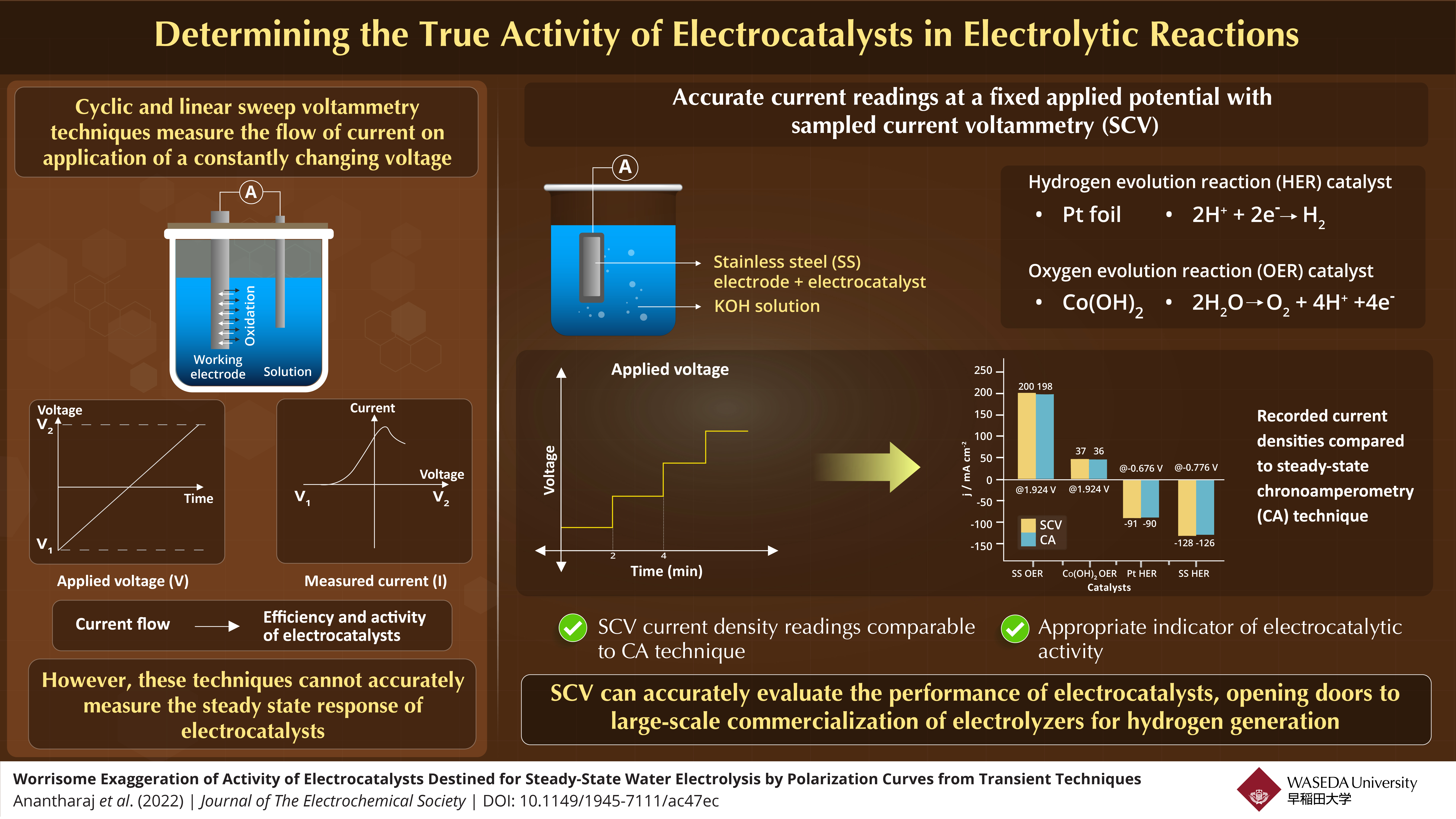
The screening of new electrocatalysts is conventionally performed with techniques such as “linear sweep voltammetry” (LSV) and “cyclic voltammetry” (CV), which involve applying a constantly changing voltage to an electrode and monitoring the resulting current. As this current depends on the rate of oxidation or reduction occurring at the electrode, the measured current readings can be used to determine the effect of an electrocatalyst on the speed of the electrolysis reaction.

However, an obvious drawback of these techniques is that they cannot accurately record the “steady-state” response of the electrocatalyst as it does not experience a particular applied voltage long enough to do so. As a result, substantially high current readings are often recorded, which do not reflect the true catalytic activity, hindering the development of efficient electrocatalysts and promotion of the same to large-scale processes.

In a new study published in the Journal of The Electrochemical Society, Assistant Professor Sengeni Anantharaj from Waseda University, Japan, along with his collaborators Dr. Subrata Kundu from CSIR-Central Electrochemical Research Institute, India, and Prof. Suguru Noda from Waseda University have now found a way around this problem, demonstrating an alternate technique called “sampled current voltammetry” (SCV) as a more reliable indicator of electrocatalytic performance at a constant steady-state applied voltage.

“Screening catalysts accurately is just as important as developing new catalysts for all energy conversion reactions,” says Anantharaj, speaking of his motivation. “Our work has highlighted a way to make accurate measurements of electrocatalytic activity previously not possible with conventional transient techniques.”
Researchers from Waseda University, Japan, suggest an alternate technique for measuring steady-state electrocatalytic activity more reliably over conventional transient techniques, opening up a potential route to efficient hydrogen generation from water splitting.
Photo courtesy: Sengeni Anantharaj from Waseda University

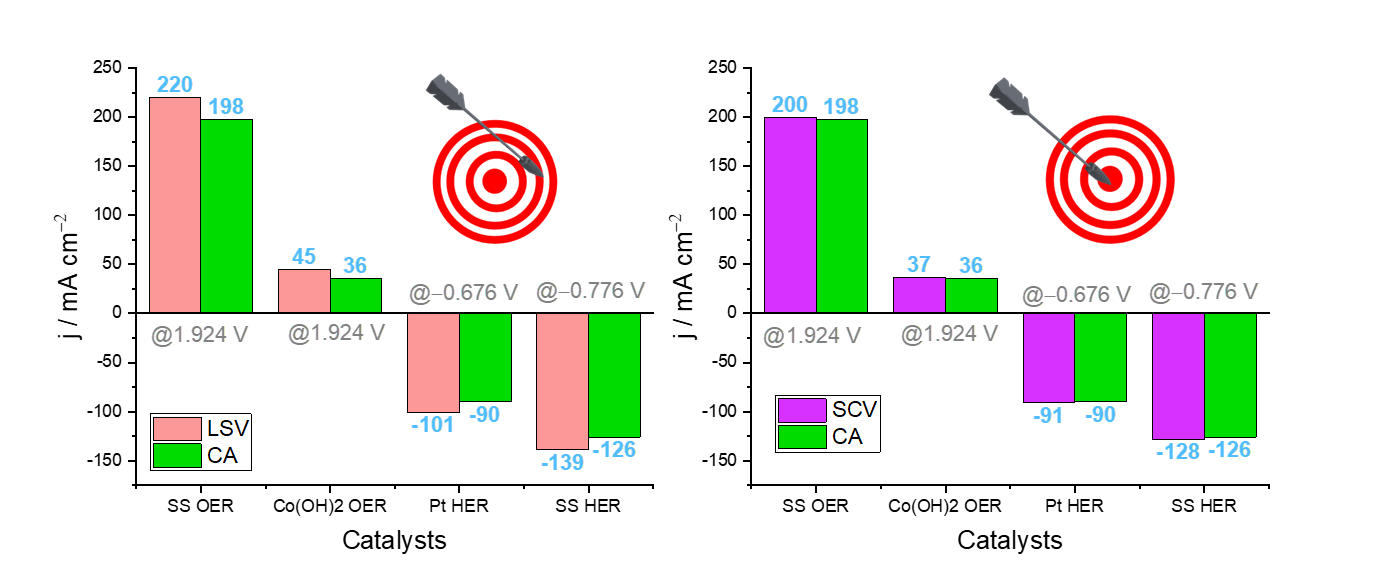
Before applying the SCV technique, the researchers analyzed the errors resulting from LSV. To show the deviation in current values, they used a steady-state technique called “chronoamperometry” (CA), which is the most accurate method of all yet time consuming to measure current at constant voltages and compared it to the values obtained from LSV.

To determine the activity of electrocatalysts used in electrolysis, they measured the current readings of both the oxygen-producing and hydrogen-producing half-cell reactions. Using a stainless-steel (SS) electrode, precipitated Co(OH)2 (cobalt hydroxide), and platinum foil as catalysts in a KOH (potassium hydroxide) solution, the researchers found that the current density readings from LSV and CA differed significantly, with the difference growing wider at higher applied voltages.

Using the same setup, they then applied the SCV technique and recorded the current densities at various fixed voltages obtained from the steady-state CA responses. “To validate the suitability of SCV, we recorded the CA responses of the SS electrode at various regularly increasing voltages for 130 seconds, within which the SS interface was able to reach a steady state,” elaborates Anantharaj.

From the sampled current readings, the researchers found negligible difference compared to the steady-state CA technique, demonstrating the reliability of the SCV in correctly determining electrocatalyst’s behavior at different voltages. Additionally, while the SCV is particularly useful in the search for a suitable electrocatalyst for water electrosplitting, it can be used to screen electrocatalysts accurately for any electrochemical reaction.

“By addressing the long-standing problem of catalyst performance loss when promoted from the lab to the practical processes, our work could speed up the worldwide adoption of large-scale hydrogen generation from electrolysis,” comments Anantharaj.

It certainly appears we’re now one step closer to the wide adaptation of hydrogen-powered future!

Reference

Authors: Sengeni Anantharaj1,2, Subrata Kundu3 and Suguru Noda1,2
Title of original paper: Worrisome Exaggeration of Activity of Electrocatalysts Destined for Steady-State Water Electrolysis by Polarization Curves from Transient Techniques
Journal: Journal of The Electrochemical Society
DOI: 10.1149/1945-7111/ac47ec
Latest Article Publication Date: 5 January 2022
Affiliations:
1Department of Applied Chemistry, School of Advanced Science and Engineering, Waseda University
2Waseda Research Institute for Science and Engineering, Waseda University
3Electrochemical Process Engineering (ECE) Division, CSIR-Central Electrochemical Research Institute (CECRI), India

  •  

「GPCRのモデルとしてのロドプシン活性化の構造・機能研究」(2022/2/21)

演題:GPCRのモデルとしてのロドプシン活性化の構造・機能研究


日時:2022年2月21日(月)14:00-16:00


会場:早稲田大学 先端生命医科学センター セミナールーム3

または Zoomによるオンライン参加

※コロナの状況によりオンラインのみとなる可能性あり


講師:木股 直規(東京大学 理学系研究科特任助教)


対象:学部生・大学院生、教職員、学外者、一般の方


参加方法:入場無料

直接会場(早稲田大学 先端生命医科学センター セミナールーム3)へお越しください。

※Zoomにて参加ご希望の方はメールにて前日までに[email protected]まで事前連絡してください。

参加のためのZoom 情報をご連絡します。


主催:先進理工学部 電気・情報生命工学科


問合せ:早稲田大学 理工センター 総務課


TEL:03-5286-3000

  •  

「アートのまちなか展開、アーキテクトの役割」(2022/1/19)

演題:アートのまちなか展開、アーキテクトの役割

日時:2022年1月19日(水)14:30-16:00

会場:オンラインにて開催

講師:山岸 綾 (一級建築士 一級建築士事務所サイクル・アーキテクツ代表)

対象:学部生・大学院生、教職員、学外者、一般の方

参加方法: 時間になりましたら下記URLより入室して下さい。 
https://zoom.us/j/86779912186?pwd=ekhWbGNUTHdKVFJqQVZUUU0yTnovQT09
ミーティングID: 867 7991 2186
パスコード: 035764
   
主催:創造理工学部 建築学科  

問合せ:早稲田大学 理工センター 総務課

TEL:03-5286-3000

  •  

「芸術祭のキュレーション」(2022/1/19)

演題:芸術祭のキュレーション

日時:2022年1月19日(水)13:00-14:30

会場:オンラインにて開催

講師:飯田 志保子(学芸員 キュレーター/国際芸術祭「あいち2022」チーフ・キュレーター(学芸統括))

対象:学部生・大学院生、教職員、学外者、一般の方

参加方法: 時間になりましたら下記URLより入室して下さい。 
https://zoom.us/j/86779912186?pwd=ekhWbGNUTHdKVFJqQVZUUU0yTnovQT09
ミーティングID: 867 7991 2186
パスコード: 035764
   
主催:創造理工学部 建築学科  

問合せ:早稲田大学 理工センター 総務課

TEL:03-5286-3000

  •  

「公共データベースを活用した昆虫の環境適応戦略の仕組みの解析」(2022/1/20)

演題:公共データベースを活用した昆虫の環境適応戦略の仕組みの解析


日時:2022年1月20日(木)17:00-18:30


会場:Zoomによるオンライン講演会


講師:天竺桂 弘子

(東京農工大学農学研究院生物生産科学部門 教授、早稲田大学 先進理工学研究科 共同先進健康科学専攻 客員教授)


対象:学部生、大学院生、教職員、学外者、一般の方


参加方法:参加無料、事前申込制


事前申込先:[email protected]

「お名前」「所属」「メールアドレス」「講演会参加の目的」を明記下さい。

早稲田大学の学生の場合は、学籍番号もご記入ください。

申し込みいただいた方に、zoomアドレスをお送りします。


主催:先進理工学部 生命医科学科


問合せ:早稲田大学 理工センター 総務課


TEL:03-5286-3000


  •  

「Computer Vision for Innovative Humna-Computer Interaction」(2022/1/24)

演題:Computer Vision for Innovative Humna-Computer Interaction


日時:2022年1月24日(月)16:20-18:30


会場:早稲田大学 早稲田キャンパス 121号館カンファレンスルーム


講師:小池 英樹(東京工業大学 教授)


対象:学部生・大学院生、教職員、学外者、一般の方


参加方法:入場無料、直接会場へ


主催:先進理工学研究科 物理学及応用物理学専攻


問合せ:早稲田大学 理工センター 総務課


TEL:03-5286-3000


  •  

「人間拡張技術とその社会実装」(2022/1/17)

演題:人間拡張技術とその社会実装


日時:2022年1月17日(月)16:20-18:30


会場:早稲田大学 早稲田キャンパス 121号館カンファレンスルーム


講師:持丸 正明(産業技術総合研究所 人間拡張研究センター長(東京大学、慶応義塾大学、筑波大学、東京都立大学 客員教授))


対象:学部生・大学院生、教職員、学外者、一般の方


参加方法:入場無料、直接会場へ


主催:先進理工学研究科 物理学及応用物理学専攻


問合せ:早稲田大学 理工センター 総務課


TEL:03-5286-3000

  •  
❌